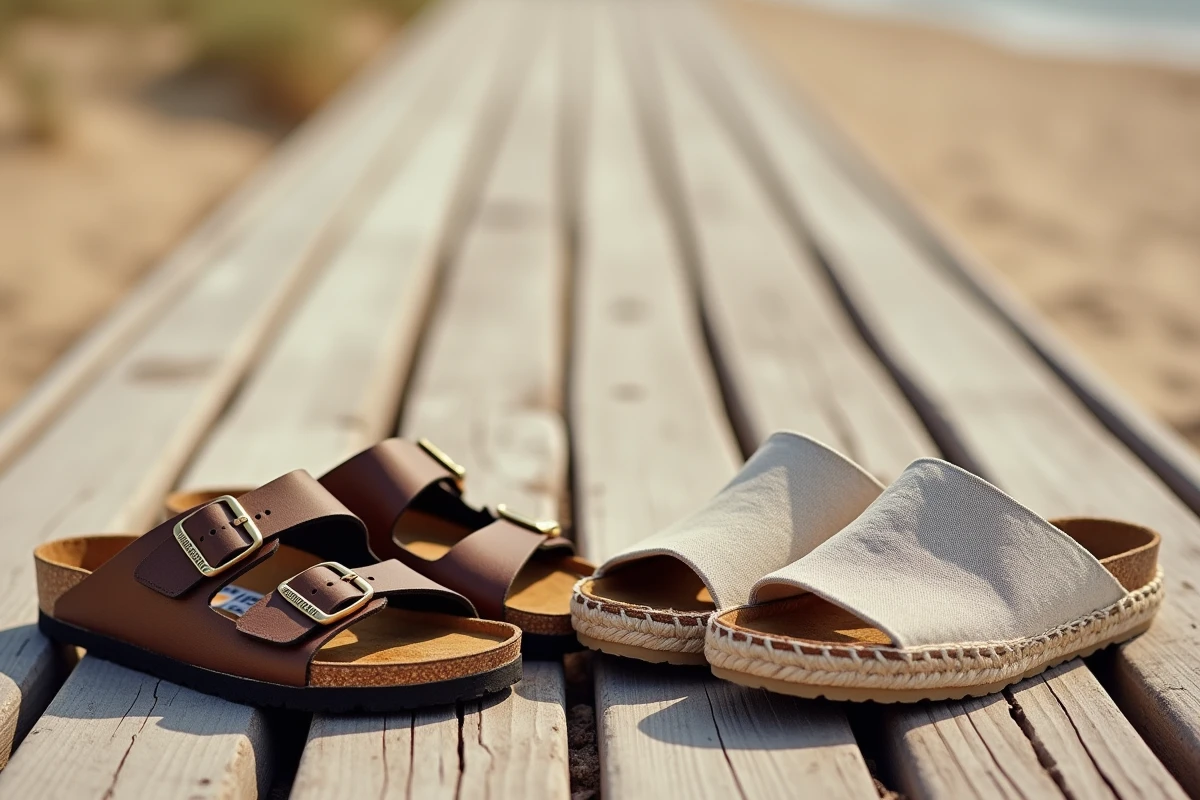
Comparing Bayton and Birkenstock comes down to measuring two philosophies of footwear based on specific criteria: construction materials, footbed behavior after several weeks of use, and cost relative to actual lifespan. Both brands occupy the comfort sandal segment, but their technical choices diverge on almost all fronts.
Birkenstock anatomical footbed vs. Bayton EVA foam: how materials affect wear
The fundamental difference between these two brands lies in the composition of the footbed. Birkenstock uses a blend of cork and natural latex covered with suede. This mixture gradually molds under the weight of the wearer to conform to the arch, heel, and forefoot.
Bayton opts for a footbed made of foam and EVA (ethylene-vinyl acetate), a lightweight synthetic polymer. Comfort is immediate from the first try-on, with no break-in period required. However, the foam compresses faster than a dense cork block.
To delve deeper into the technical differences between the two brands, a Bayton or Birkenstock comparison on Calcea details the differences in foot support over time.
The Birkenstock cork requires a few days of wear before it molds to the foot. This break-in phase can be surprising: the footbed seems stiff at first, then gains personalized flexibility. The cork footbed retains its shape much longer than the EVA foam, which loses its bounce after a few months of daily use.

Comparison table Bayton and Birkenstock: price, materials, and usage
| Criterion | Birkenstock | Bayton |
|---|---|---|
| Footbed materials | Cork, natural latex, suede | Foam, EVA, synthetic materials |
| Immediate comfort | Moderate (break-in required) | High from the first try-on |
| Durability of support | Several seasons | Notable decrease after a few months |
| Price range | Above 100 euros | Generally below 80 euros |
| Upper materials | Leather, nubuck, Birko-Flor | Synthetics, faux leather |
| Optimal usage | Extended walking, standing work | Occasional outings, leisure |
This table highlights a clear gap in the relationship between purchase price and effective lifespan. A Birkenstock model costs more upfront, but its foot support lasts through several summers. A Bayton model priced at half can require replacement much sooner.
Durability of comfort sandals: natural cork vs. synthetic soles
The question of durability is not limited to the number of months before the sole flattens. It also touches on reparability. The Birkenstock Arizona or Madrid models can be resoled: a cobbler can replace the outsole while preserving the molded cork footbed. This detail significantly extends the total lifespan of the sandal.
Bayton sandals, built on a glued foam-EVA base, cannot be resoled. When the sole is worn out, the entire pair must be replaced.
From an environmental perspective, the comfort shoe sector is experiencing regulatory evolution. According to the “European Footwear Market Observatory 2024” report by the European Confederation of Footwear (CEC), demand for soles made from renewable materials has been increasing in Europe since 2023. Certified cork falls into this category. Standard EVA, derived from petroleum, does not, except in its still marginal bio-sourced versions on the market.
- Birkenstock cork is a renewable material, harvested without cutting down the tree, and biodegradable at the end of its life.
- The EVA used by Bayton is recyclable in certain specialized streams, but its production remains energy-intensive.
- European distributors are increasingly incorporating the carbon footprint per pair into their sourcing criteria, favoring repairable models.
Model selection and style of Bayton and Birkenstock sandals
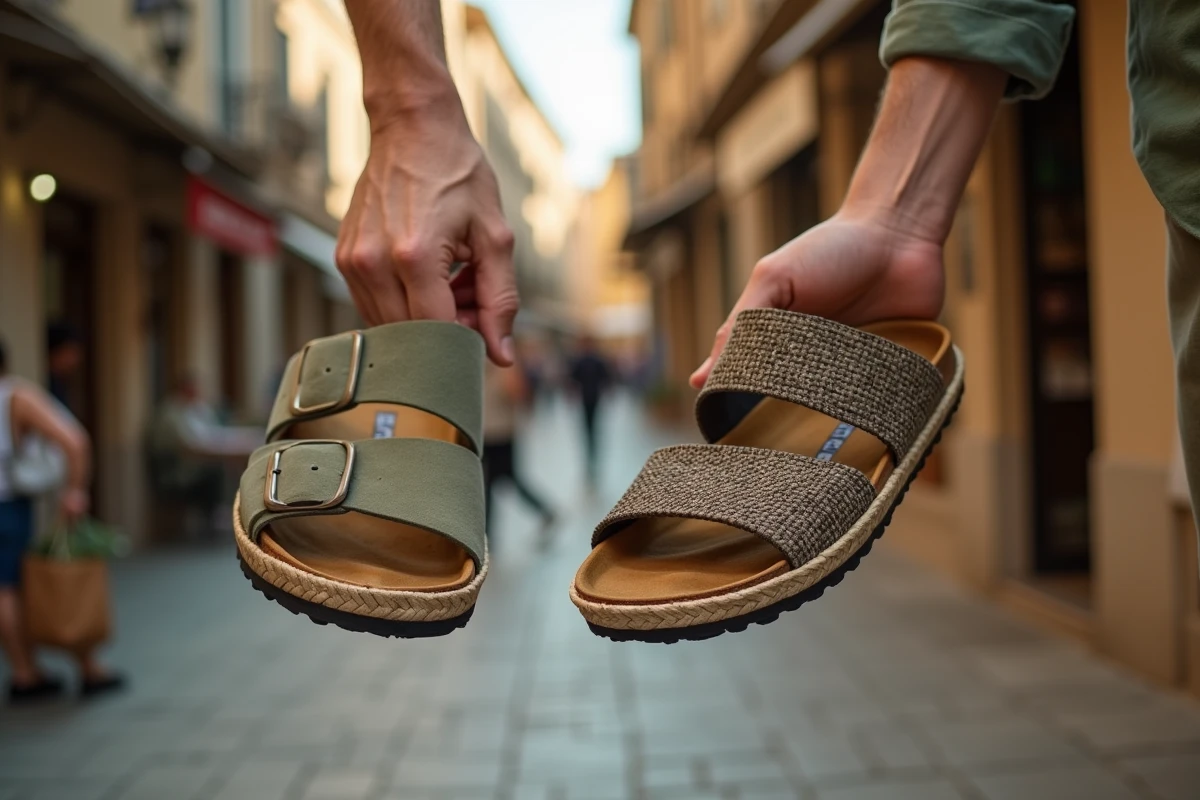
Birkenstock offers a range focused on classic silhouettes: Arizona with two straps, Madrid with a single strap, Gizeh with toe post. The colors remain subdued, with limited seasonal variations. Leather, nubuck, and Birko-Flor (proprietary synthetic material) make up the uppers.
Bayton plays with a broader catalog in terms of colors and patterns. Women’s models come in bright shades and shiny finishes that Birkenstock does not offer. For casual fashion use, Bayton provides more visual variety at a lower price.
The downside of this diversity: the synthetic materials of Bayton’s uppers age differently than leather. Full-grain leather develops a patina, while faux leather cracks. After two summers of regular use, the aesthetic gap between the two brands clearly favors the models with natural uppers.
European regulations on chemical substances in sandals
One aspect rarely addressed in sandal comparisons concerns the standards applicable to glues and dyes. The REACH regulation governs the chemical substances allowed in shoes sold on the European market. The update to regulation (EU) 2023/1115 on products related to imported deforestation adds a layer of traceability for leathers used in uppers.
Birkenstock, a historic European manufacturer, applies these standards throughout its supply chain. For brands whose production is outsourced, compliance depends on the rigor of import controls. This factor does not change immediate comfort, but it influences the chemical composition of materials in direct contact with the skin of the foot.
- REACH imposes strict thresholds on heavy metals, phthalates, and certain solvents in sole adhesives.
- Regulation 2023/1115 requires documented traceability for any bovine leather used in a product sold in the EU.
- Sandals with 100% synthetic uppers are exempt from leather constraints but remain subject to REACH limits on plasticizers.
The choice between Bayton and Birkenstock boils down to a trade-off between immediate budget and usage cost over several seasons. A pair of resoleable and molded Birkenstocks remains functional long after a pair of Bayton has lost its cushioning. For occasional use or a first try at the anatomical sandal format, Bayton serves its purpose at a lower cost. The decisive factor remains the expected frequency of wear.