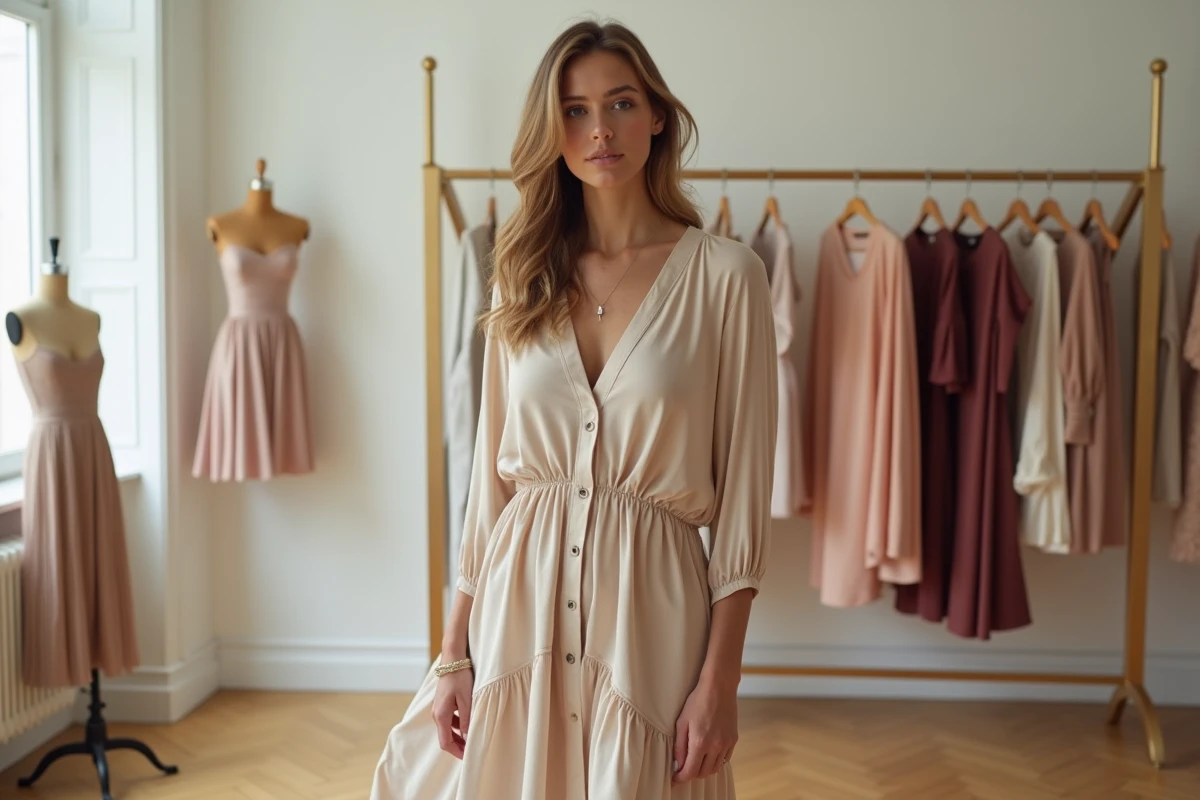
The loose dress is making a comeback in wardrobes as a daily piece, worn both at the office and on weekends. Its fluid cut is appealing for comfort, but it presents a recurring challenge: avoiding a shapeless effect. Here are ten practical tips for wearing a loose dress with style and elegance, by working with volumes, materials, and accessories.
1. Define the waist with a thin leather belt
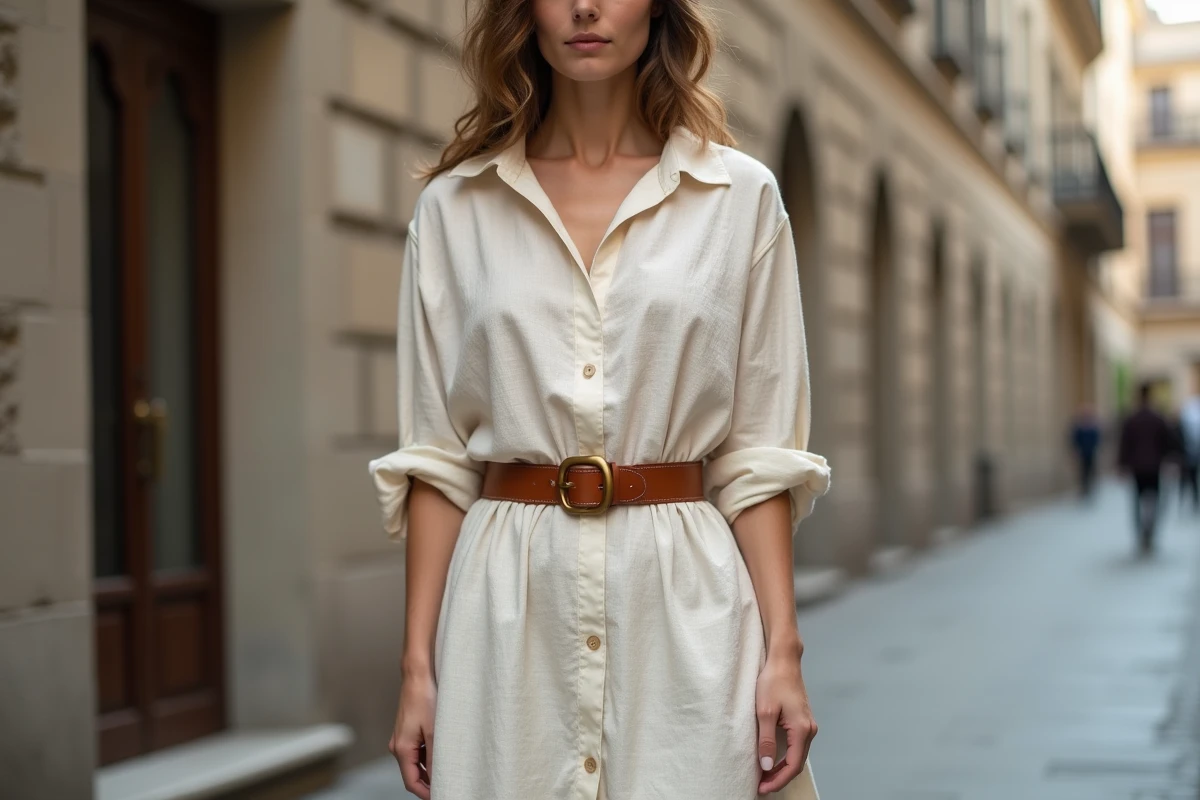
The most effective reflex for structuring a loose dress remains the belt. A thin model, made of smooth leather, placed at the natural waist creates a visual reference point that reshapes the silhouette without compressing it.
Opt for a width of two to three centimeters. A belt that is too wide on a fluid fabric tends to gather the material and create unsightly folds. The thin belt, on the other hand, defines the waist without crushing the drape of the fabric.
2. Choose an empire cut to elongate the silhouette
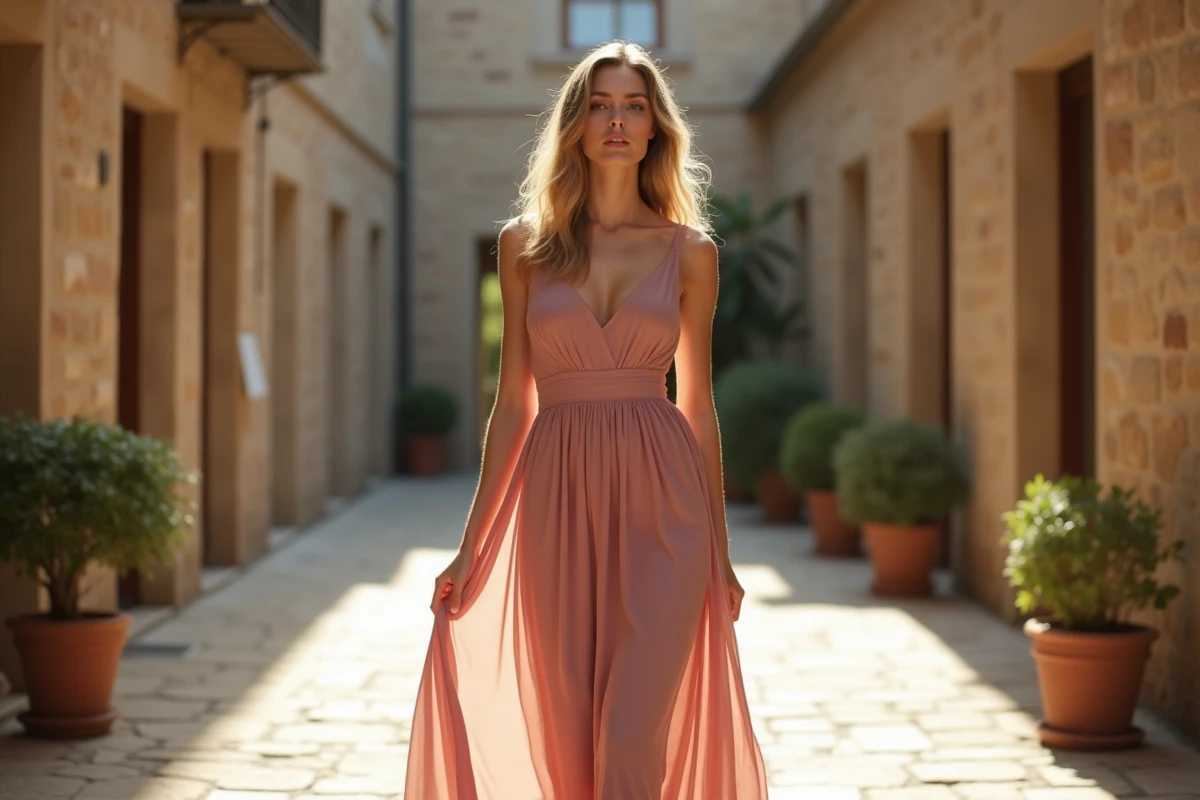
The empire cut places the seam under the bust, then lets the fabric fall freely. This high positioning creates a long vertical line, from the bust to the hem, which visually elongates the body.
This cut is particularly suited for midi dresses. In a loose version, it retains all the comfort of a fluid garment while avoiding the sack effect thanks to the high structure. To enhance the elongation, wear it with low-heeled sandals rather than flat sneakers. You can also adopt the loose dress according to Mlle by exploring other combinations of cuts and accessories.
3. Layer a structured blazer over the dress

The blazer adds a sharp silhouette that contrasts with the fluidity of the dress. Worn open, it frames the silhouette and provides a more graphic reading of the outfit. This type of structured piece transforms a casual look into workwear.
A lightly padded blazer works better than a soft model. The idea is to balance the volume of the bottom with a defined shoulder line. Materials like cold wool or thick cotton hold their shape better than fine jersey.
4. Focus on a material with drape rather than volume
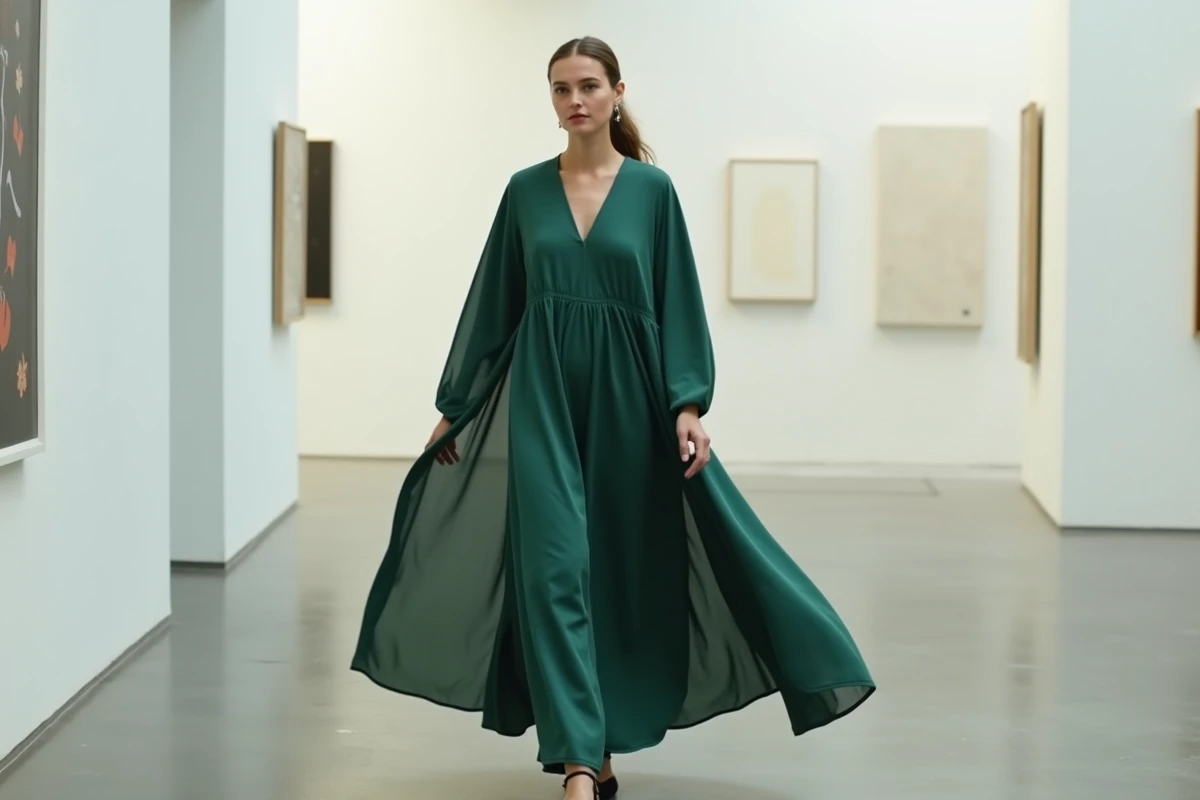
Not all loose dresses are created equal, and the difference often lies in the fabric. Viscose or lyocell drape well and glide along the body. A stiff cotton or cheap polyester, on the other hand, adds dead volume.
Before buying, do the wrinkle test: crumple a section of the dress in your hand and release. If the fabric quickly relaxes and falls smooth, the drape will be good when worn. The choice of material is as important as the cut to achieve a fluid silhouette without artificial roundness.
5. Opt for pointed-toe shoes to refine the look
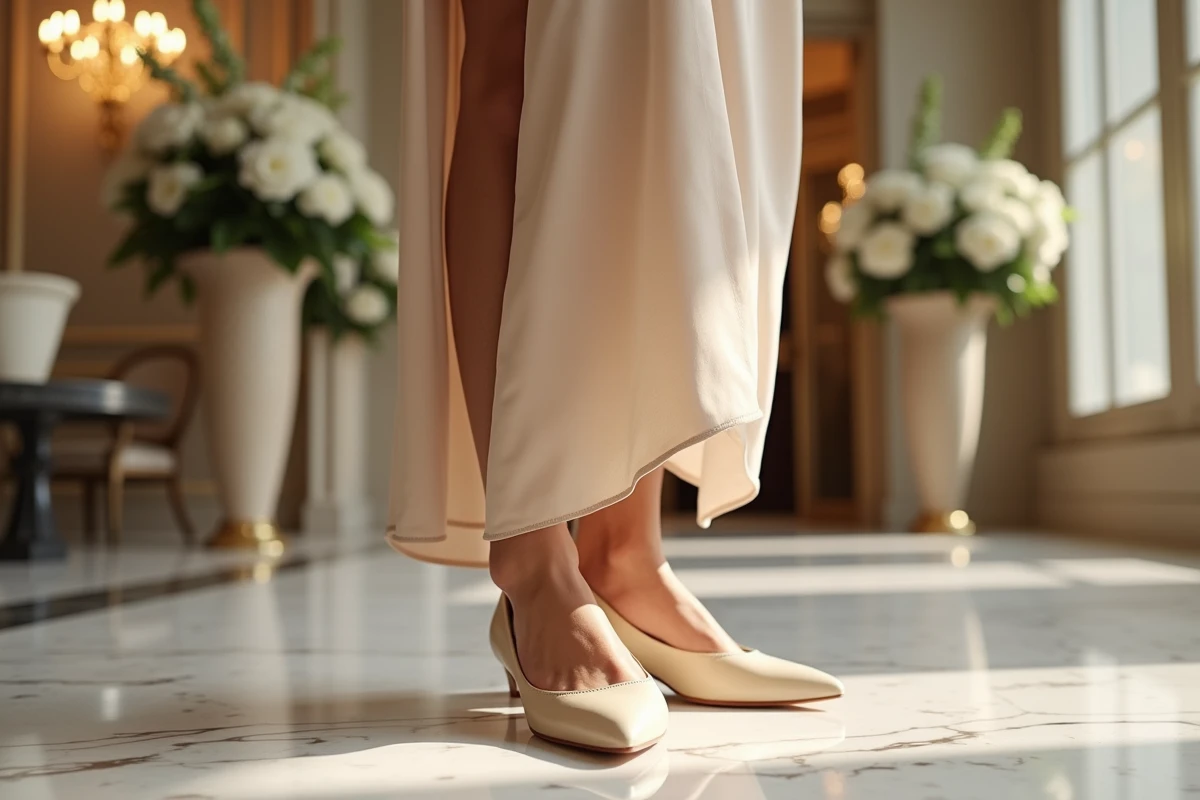
The pointed toe draws the eye forward and creates a visual extension of the leg. With a loose dress that stops at the calf, this detail changes the proportion of the outfit.
Pointed mules, low-heeled pumps, or tapered ankle boots work well. Thick-strapped sandals or chunky sneakers, on the contrary, weigh down the base of the look. The principle is simple: balance the volume of the top with the finesse of the bottom.
6. Play with contrast using a structured accessory: the rigid bag
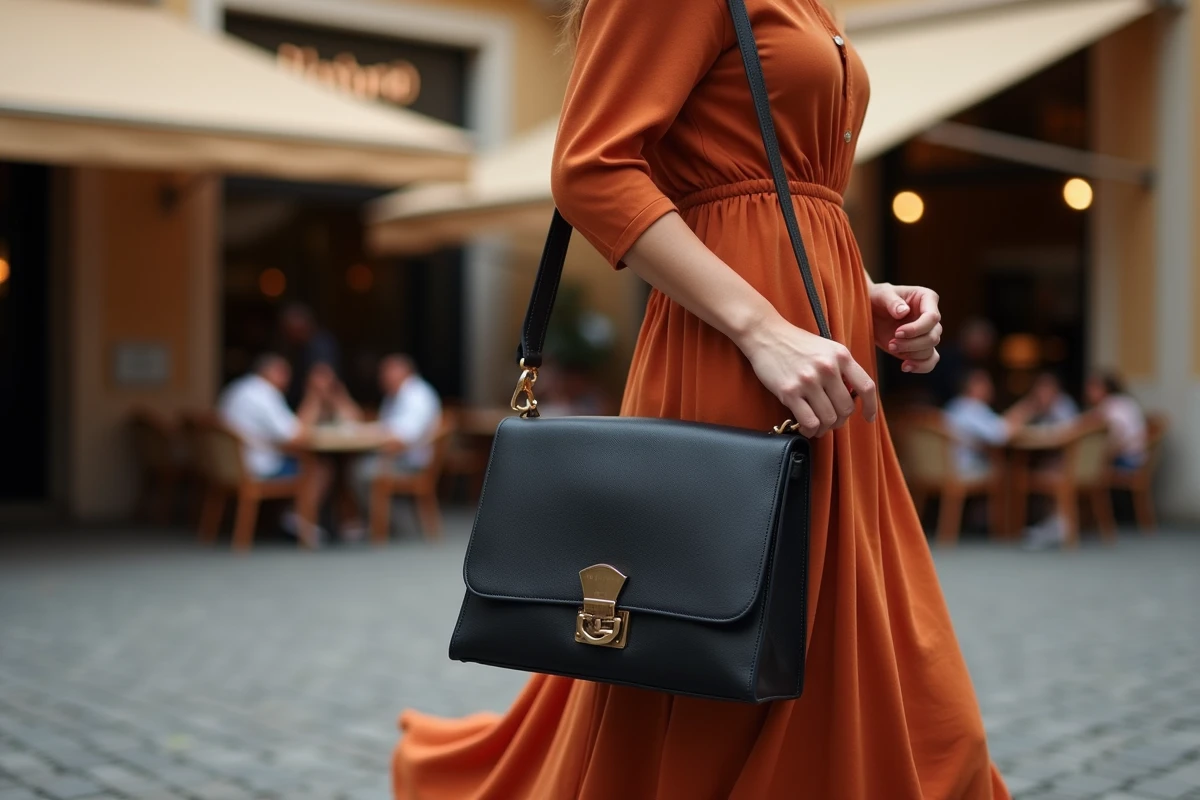
A soft bag worn with a soft dress gives a completely slouchy look. A rigid bag, like a briefcase or boxy bag, introduces a geometric counterpoint that elevates the whole.
The medium format works best. A bag that is too small disappears in the volume of the dress, while an oversized tote adds even more bulk. Aim for a bag that can be carried by hand or with a short shoulder strap, at waist height, to reinforce the structural point.
7. Prefer a midi length that grazes the ankle
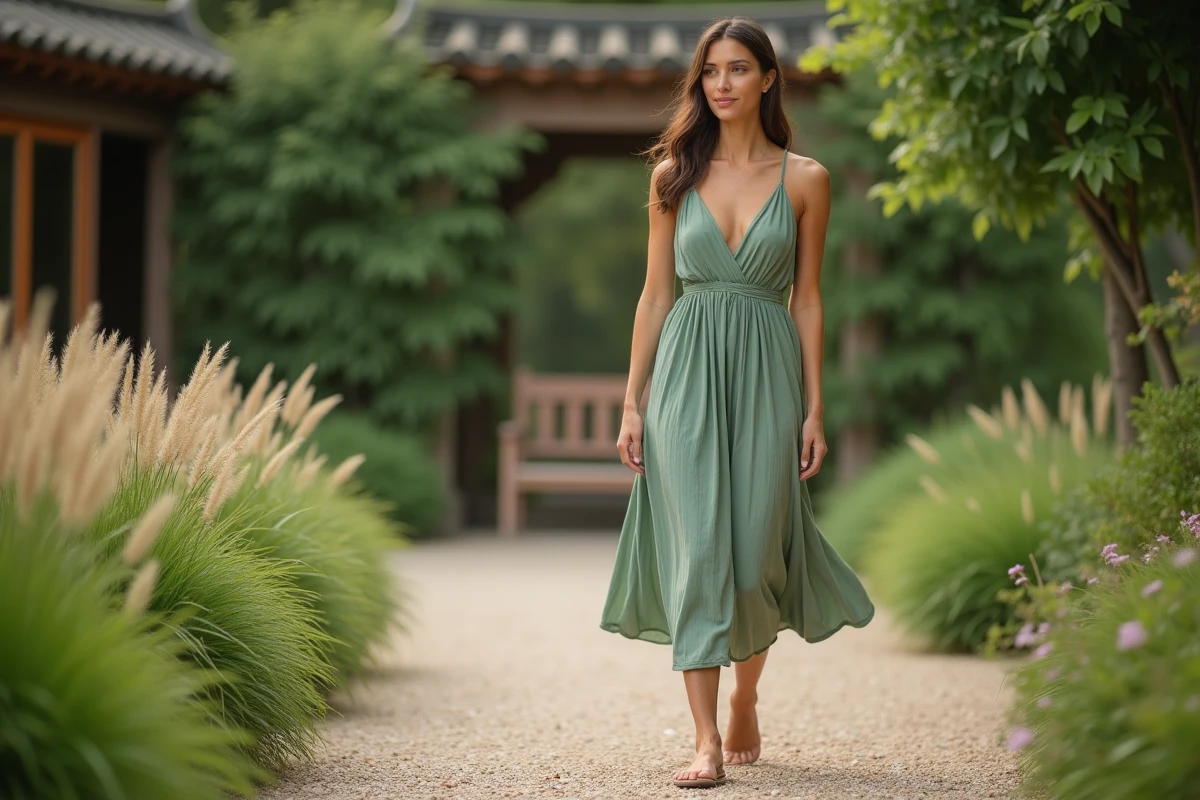
The ideal length for a loose dress is between mid-calf and the ankle. Too short, the loose dress gives a balloon effect. Too long, it drags and shortens the silhouette.
When the hem grazes the ankle, it reveals the shoes and creates a clean vertical line. This midi length works on all body types and allows the dress to be worn with both flat sandals and small heels.
8. Roll up the sleeves to break excessive casualness
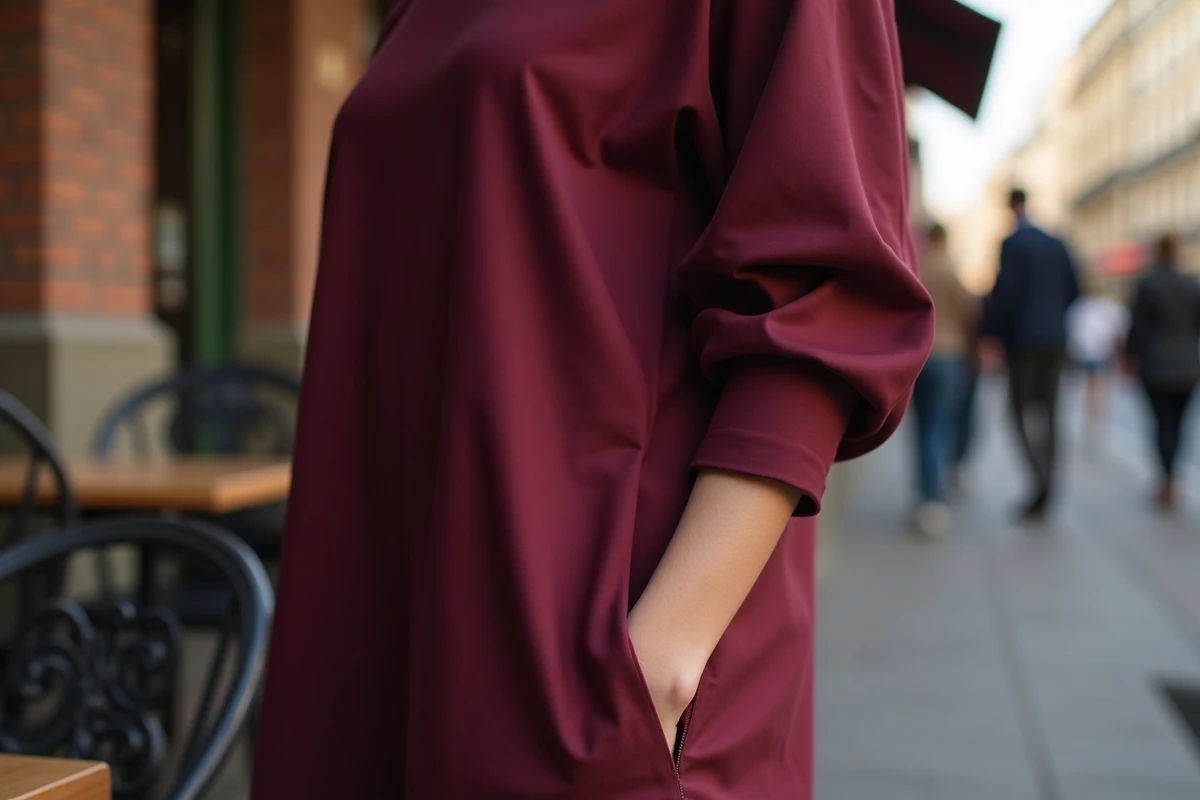
On a loose shirt dress or a long-sleeved linen dress, simply rolling up the sleeves to the elbow changes the perception of the outfit. This gesture exposes the wrists, slims the forearm, and gives an impression of stylistic intent.
Have you ever noticed that a rolled-up shirt looks more polished than one with drooping sleeves? The same mechanism applies to the loose dress. Two or three cuffs are enough.
9. Wear long jewelry to create vertical lines
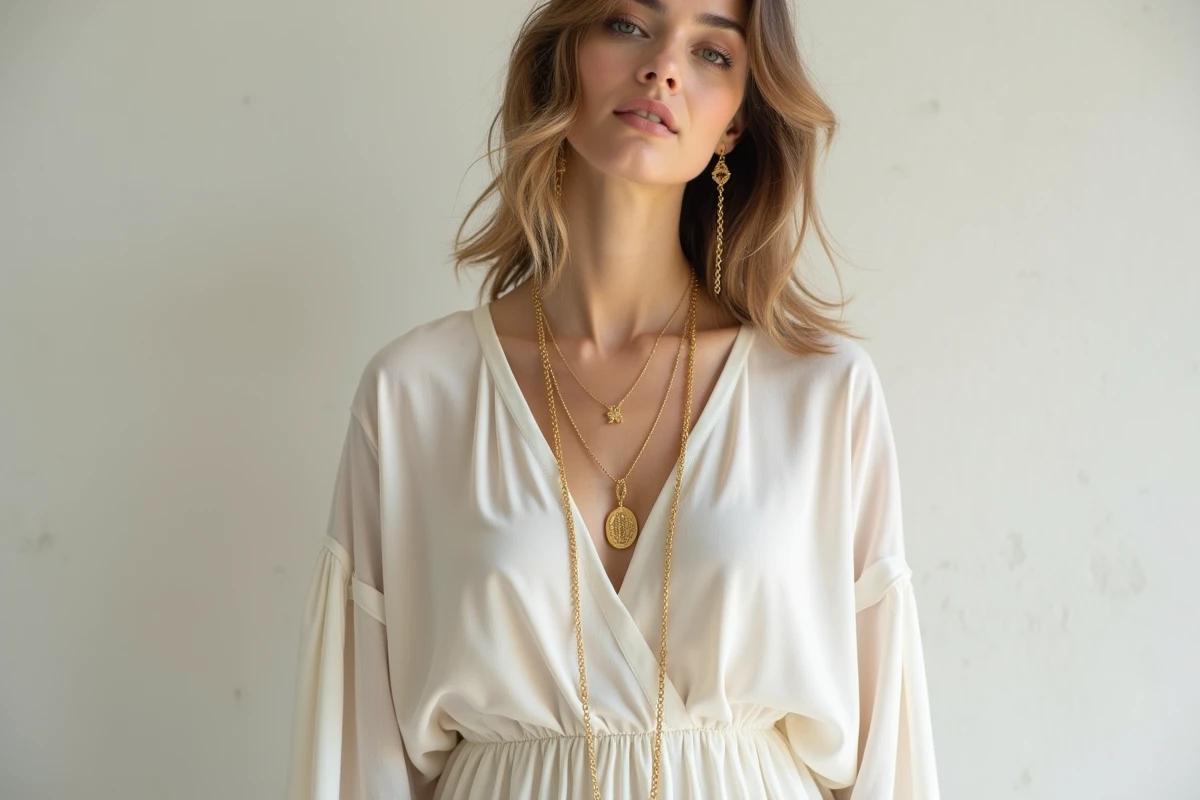
A long necklace or pendant guides the eye from top to bottom, which elongates the silhouette. On a solid loose dress, a necklace that falls below the bust acts as a visual arrow toward the center of the body.
- Thin necklace with a discreet pendant for a sober office look
- Long pearl necklace for a more dressed-up evening outfit
- Simple gold chain doubled in two rows to add relief without overloading
Avoid chokers that cut verticality and accentuate the width of the dress at the shoulders.
10. Choose a solid color rather than a busy print
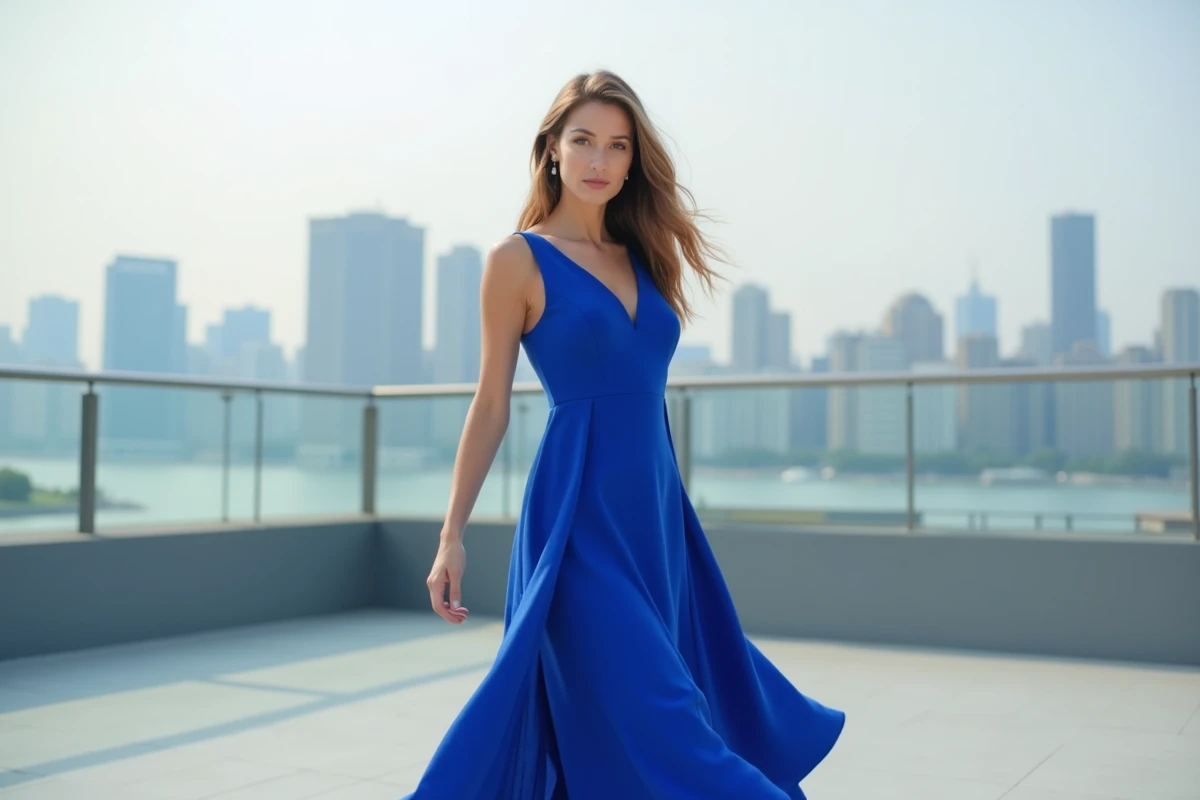
Large patterned prints add a layer of visual volume to an already loose cut. A solid dress, on the other hand, simplifies the reading of the silhouette and leaves space for accessories to structure the look.
Neutral shades (ecru, navy blue, khaki, gray mélange) work as a backdrop. They allow for varying looks with a colorful scarf, a contrasting belt, or a printed blazer. The solid loose dress becomes a staple piece in a capsule wardrobe, worn multiple times a week in different combinations.
Wearing a loose dress with elegance rests on a constant principle: compensate for the fluidity with at least one structured element, whether it’s a belt, fine shoes, or a blazer. The comfort of a loose cut does not require sacrificing a defined silhouette, as long as you work on proportions with each look.