
A PayPal direct debit from a bank account works like a standard debit initiated by a third party via the SEPA protocol. PayPal, as a licensed electronic money issuer in Europe, debits the bank account linked to the user profile with each transaction, without the account holder needing to fund an intermediate balance. This smooth mechanism hides several friction points that most online payment guides do not address from a banking perspective.
Fees in case of PayPal direct debit failure

When a PayPal direct debit fails (insufficient funds, closed account, limit reached), the transaction is rejected by the account holder’s bank. PayPal then applies fixed penalties per incident, clearly priced in its public fee schedule.
The problem does not stop there. The bank itself may charge fees for rejecting the direct debit, varying by institution and account type. The account holder thus faces double billing for a single incident: from both PayPal and the bank.
The distinction between PayPal’s status (electronic money issuer) and that of a traditional bank is fundamental to understanding this financial cascade. PayPal does not hold a traditional banking license in France: funds pass through escrow accounts, and recourse in case of disputes does not follow the same channels as for a direct debit issued by a telecom operator or energy supplier.
To delve deeper into this topic, an article details how PayPal direct debits on a bank account can generate such situations.
Scams involving fake PayPal direct debits: the mechanism to spot
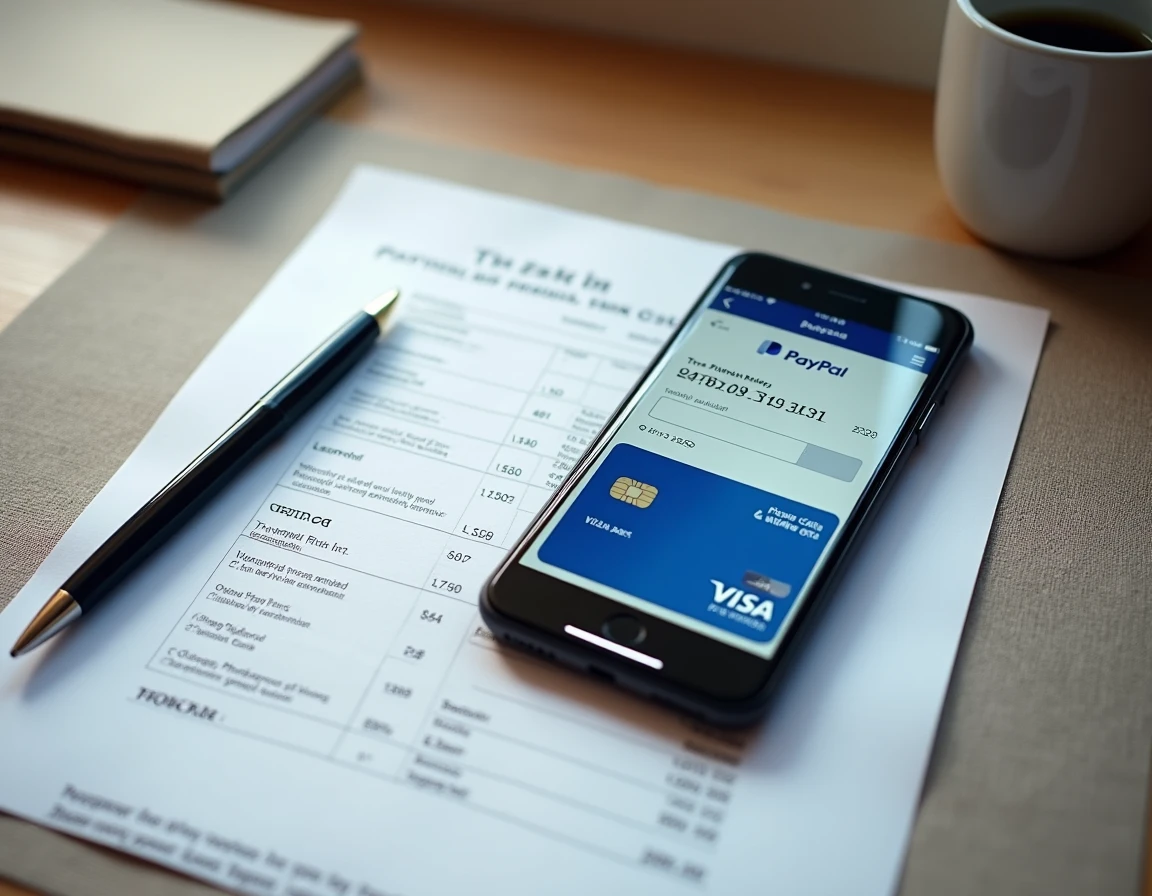
In recent years, reports of fake PayPal emails demanding unlocking fees have multiplied, especially in the context of peer-to-peer sales on platforms like Vinted or Leboncoin. The scenario is always the same: a buyer claims to have paid via PayPal, then the victim receives a message mimicking the official interface.
This message indicates that a transfer is “pending” and requests payment of fees to release it. No actual transfer has been issued. The fake direct debit targets the bank account directly if the victim clicks on a phishing link and enters their details.
Concrete warning signs
- The sender’s email address does not match the official paypal.com domain (variations with hyphens, unusual subdomains, or different extensions)
- The message asks for “transaction fees” or “insurance fees” to unlock an incoming payment, which PayPal never does
- The payment link redirects to a page that directly asks for bank account details or identifiers, whereas PayPal never operates this way for an incoming payment
The basic rule remains to verify each notification directly in the PayPal app or website, without going through links contained in an email.
Opposition and revocation of a PayPal SEPA direct debit mandate
A SEPA direct debit mandate granted to PayPal can be revoked at any time with the account holder’s bank. This action cuts off the debit authorization, but it does not close the PayPal account and does not erase any outstanding debts.
There are two distinct procedures that are often confused:
- The one-time opposition, which contests a direct debit that has already been made. The account holder has eight weeks to contest an authorized direct debit, and thirteen months for an unauthorized direct debit, according to SEPA rules
- The revocation of the mandate, which prevents any future PayPal direct debit from this account. It is done by mail or through the bank’s online space
- The disconnection of the bank account in the PayPal interface, which removes the technical link between the PayPal profile and the bank account details
Revoking the mandate without disconnecting the account in PayPal can create an ambiguous situation: PayPal will attempt to debit, the bank will reject it, and failure fees will accumulate on both sides.
PayPal account and tax declaration obligation in France
A often overlooked point concerns the tax status of the PayPal account. Recent tax awareness content reminds us that PayPal accounts linked to a French bank account and used solely for everyday payments or occasional sales receipts, below a certain annual volume, are not systematically subject to declaration as foreign accounts.
PayPal (Europe) is based in Luxembourg. In principle, any account opened with a financial institution located outside France must be declared using form 3916. However, the tax administration distinguishes between accounts used as mere payment intermediaries and those that actually serve to store funds or receive regular income.
When declaration becomes mandatory
As soon as a positive balance is maintained on the PayPal account (even temporarily between two transactions), or when income flows through it regularly, the declaration obligation applies. Failure to declare exposes one to a fine per undeclared account and per concerned year.
The safest approach remains to systematically declare the PayPal account on form 3916, even in case of doubt about the volume of use. The fine for non-declaration far exceeds the time spent filling out the form.
The combination of electronic money status, specific fees in case of incidents, and Luxembourg residency makes the PayPal account a payment tool whose banking and tax implications deserve attention that goes beyond a simple validation click.