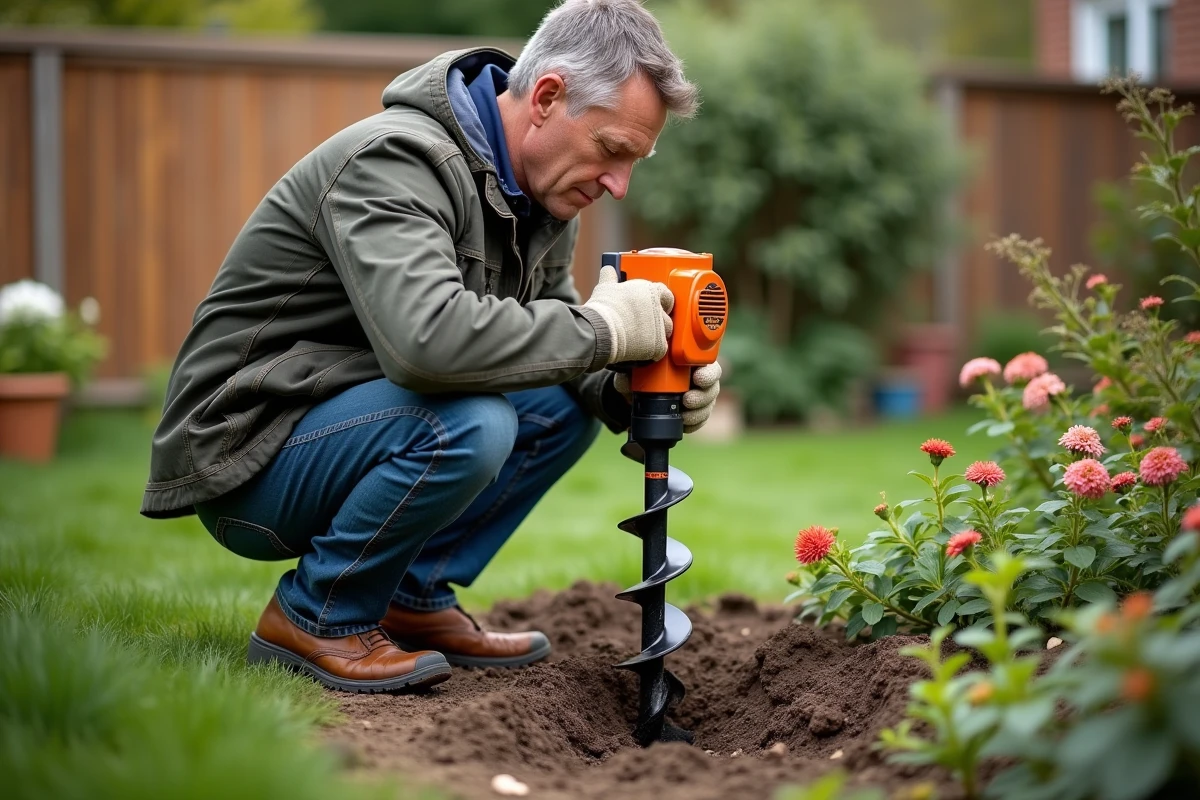
Changing the auger often reveals that power alone does not always guarantee the best result. Some thermal models, despite being more expensive, struggle to compete against electric models in specific terrains or for occasional uses.
The differences in performance are not solely due to the motorization, but to a set of technical parameters, accessories, and usage conditions. The choice also depends on the diameter of the holes to be made, the type of soil, and the frequency of use. There are many factors to check before purchasing, which are crucial to avoid costly mistakes.
Understanding the different types of augers and their uses in the garden
When it comes to digging, the auger has no equal for attacking the soil with precision. As the ultimate drilling tool, it facilitates the creation of clean holes for planting, installing a fence, or securing structures. However, not all terrains have the same requirements, nor do all tasks have the same intensity. Several families of tools meet distinct needs.
Here are the main types of augers encountered, each showcasing its strengths depending on the context:
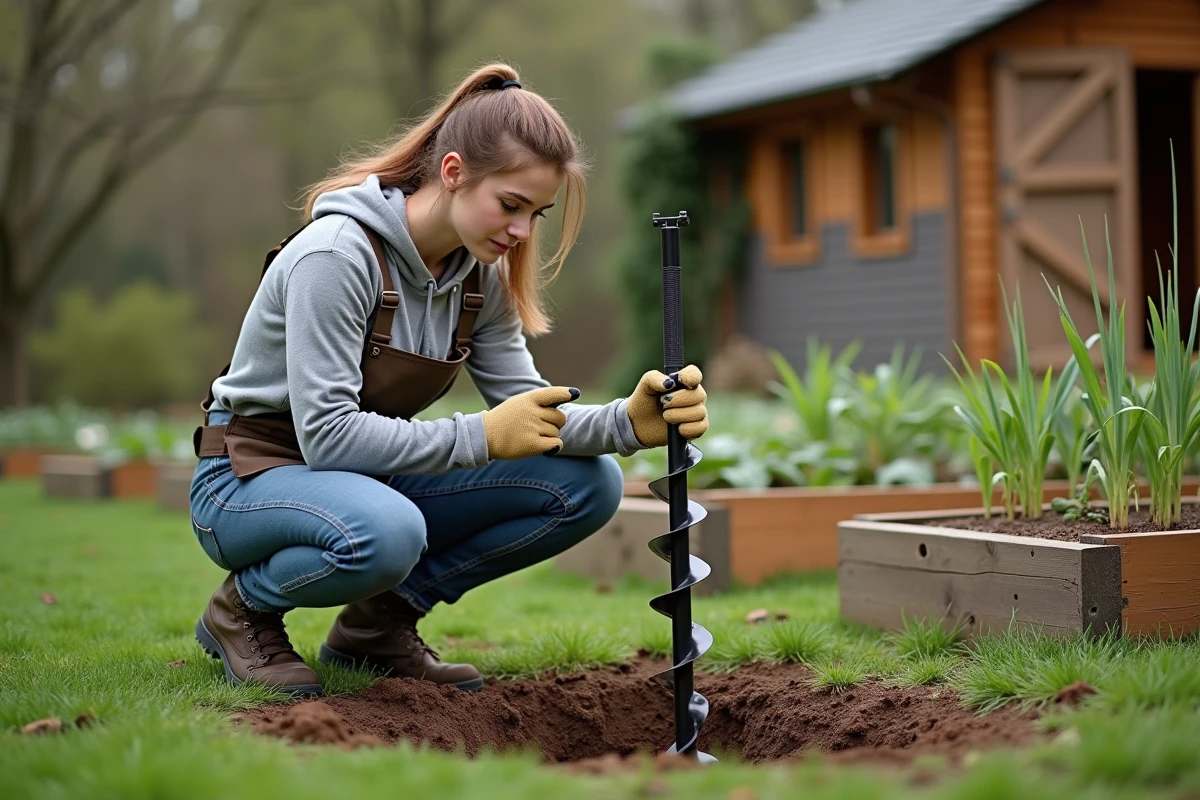
- Manual auger: consisting of a handle and a helical bit, it is perfectly suited for small projects on soft soils. It requires some effort but allows for reliable results for a few plantings or stakes.
- Electric auger: plugged into a power source or powered by a battery, it is appealing for its maneuverability and low noise level. It is ideal for regular work on terrains with minimal resistance, offering true comfort of use.
- Thermal auger: equipped with a gasoline engine, it is designed for difficult, stony soils or for those requiring significant digging. Some models, self-propelled or on wheels, facilitate deep and wide holes, perfect for mature trees or more ambitious foundations.
- Hydraulic auger: a professional tool, to be mounted on an excavator. It is used on large construction sites where precision and power are required.
The strength of these tools also lies in the variety of bits and diameters available. Choosing blindly is impossible: the type of soil, the size of the hole, and the expected depth dictate the selection of the most suitable tool. To explore the topic in more detail, find out how to select and handle your auger, and learn more about Le Jardinier Décorateur.
What criteria should you prioritize when choosing the thermal auger most suited to your needs?
The thermal auger excels where the soil resists and human strength is no longer sufficient. The choice of the gasoline engine is a starting point: the higher the power, the more efficient you will be against compact or stony soils, while limiting the effort required for long series of holes.
To guide your decision, keep the following criteria in mind:
- Engine power: select a motorization that matches the difficulty of the terrain and the frequency of use. Clayey or stony soil requires robustness, especially if the drilling is numerous and deep.
- Diameter and length of the bit: each bit corresponds to a hole diameter, generally from 100 to 450 mm. Adjust according to the size of the plants or the dimensions of the foundations to be made. The length of the bit determines the maximum achievable depth, a central criterion for demanding projects.
- Ergonomics and safety: aim for a comfortable grip, well-distributed weight, and intuitive controls. Models equipped with vibration dampers or enhanced safety devices allow for safer and more enjoyable use.
The ability to interchange bits offers great flexibility, switching from a planting hole to a post anchor in the blink of an eye. Models designed for professionals are built to last, while some compact tools are perfectly suited for experienced gardeners. Finally, ease of maintenance and the quick availability of spare parts will make a difference over time.
Practical tips for effective, safe, and durable use of your thermal auger
Handling a thermal auger requires method and attention. Before each operation, check the condition of the bit, handles, and gasoline engine. A quick check limits unpleasant surprises: blockage, breakage, or mechanical incidents. When starting, stabilize the device well, especially on difficult terrain; the power requires control.
To work under good conditions, follow these precautions:
- Always wear safety equipment: sturdy gloves, protective goggles, appropriate footwear.
- Work on a clear surface, free of obstacles and debris. Be cautious of buried cables and thick roots that could damage the bit.
- Advance with small impulses, without forcing. Allow the machine to progress at its own pace to avoid overheating or jamming the engine.
After each session, thoroughly clean the auger: remove the soil, sharpen the bit if necessary, lubricate the moving parts. Regular maintenance prolongs the tool’s lifespan while maintaining optimal performance. Regularly check the oil and gasoline levels; replace any worn parts without delay.
Stay attentive to the engine’s behavior and the vibrations felt: these signals may indicate a problem or soil unsuitable for the tool. Adjust the rotation speed according to the terrain to preserve the mechanics and ensure effective drilling.
With each hole drilled, the thermal auger reveals its potential. Well chosen, maintained, and handled with care, it transforms tedious tasks into mastered actions, giving the gardener the freedom to imagine bigger, stronger, and deeper.