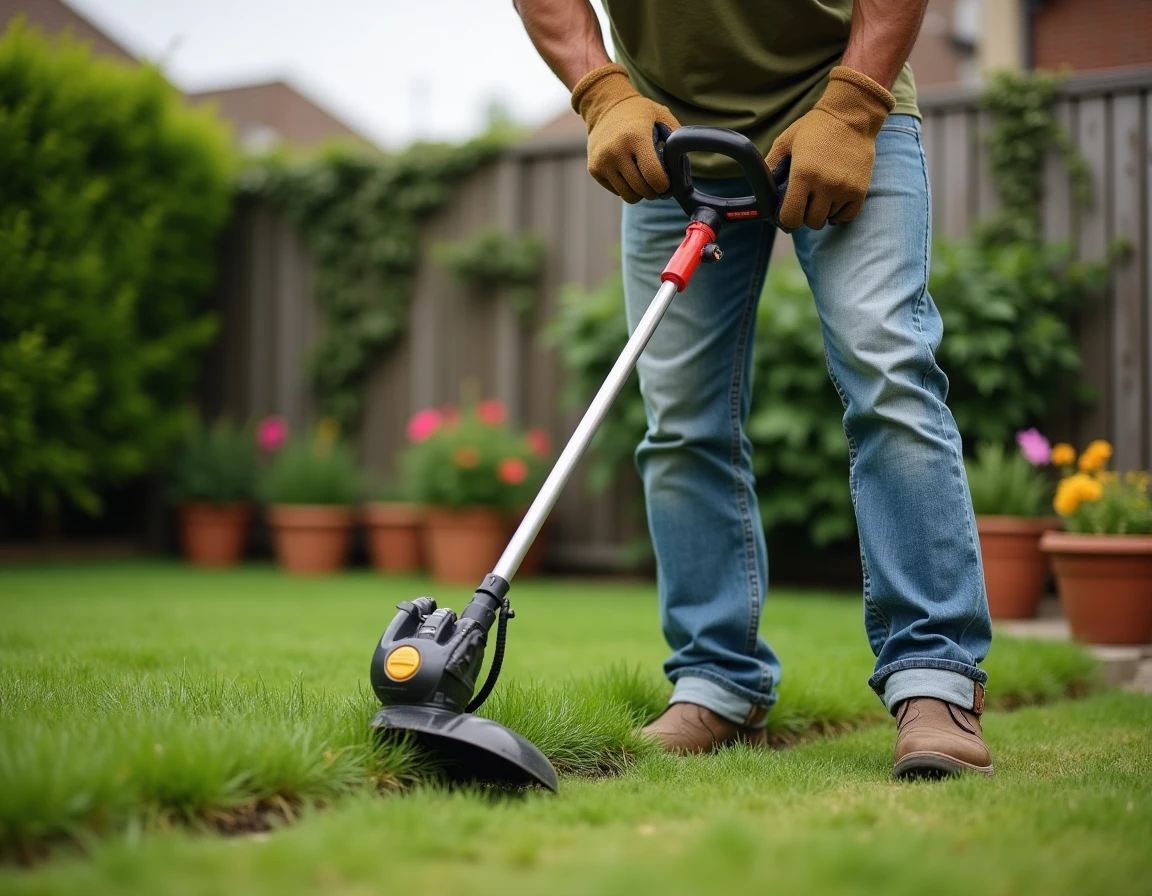
A plot of 1,500 m² with fencing on three sides, flowerbed borders, and a slope at the back of the lot: the mower consistently leaves strips of untouched grass along each obstacle. The thermal string trimmer solves this problem, but not all models are equal when it comes to this type of configuration. Choosing the right one involves considering the nature of the terrain, the type of vegetation to be cut, and the actual usage constraints.
Engine displacement and torque: what really matters in the field

Comparisons often focus on wattage. For a thermal string trimmer, it is the engine displacement and torque that determine the ability to tackle dense vegetation without the RPM dropping.
An engine around 25 cm³ is sufficient for regular grass along paths or walls. As soon as you move to tall grasses, woody regrowth at the foot of a fence, or thick nettles, you need to increase the displacement. Models above 30 cm³ maintain their RPM even when the line or blade encounters significant resistance.
The choice between 2-stroke and 4-stroke engines has direct implications for daily use. A 2-stroke is lighter, starts quickly, but requires a precise oil-gas mixture. A 4-stroke consumes less, vibrates less, and produces less noise, which matters if you are working near homes. Feedback varies on comparative longevity, but the 4-stroke requires more conventional engine maintenance (oil change, separate oil level).
You can find detailed sheets and up-to-date comparisons on coupebordurethermique.fr, which helps compare engine displacements model by model before making a decision.
Cutting head and nylon line: adapting the system to the type of vegetation
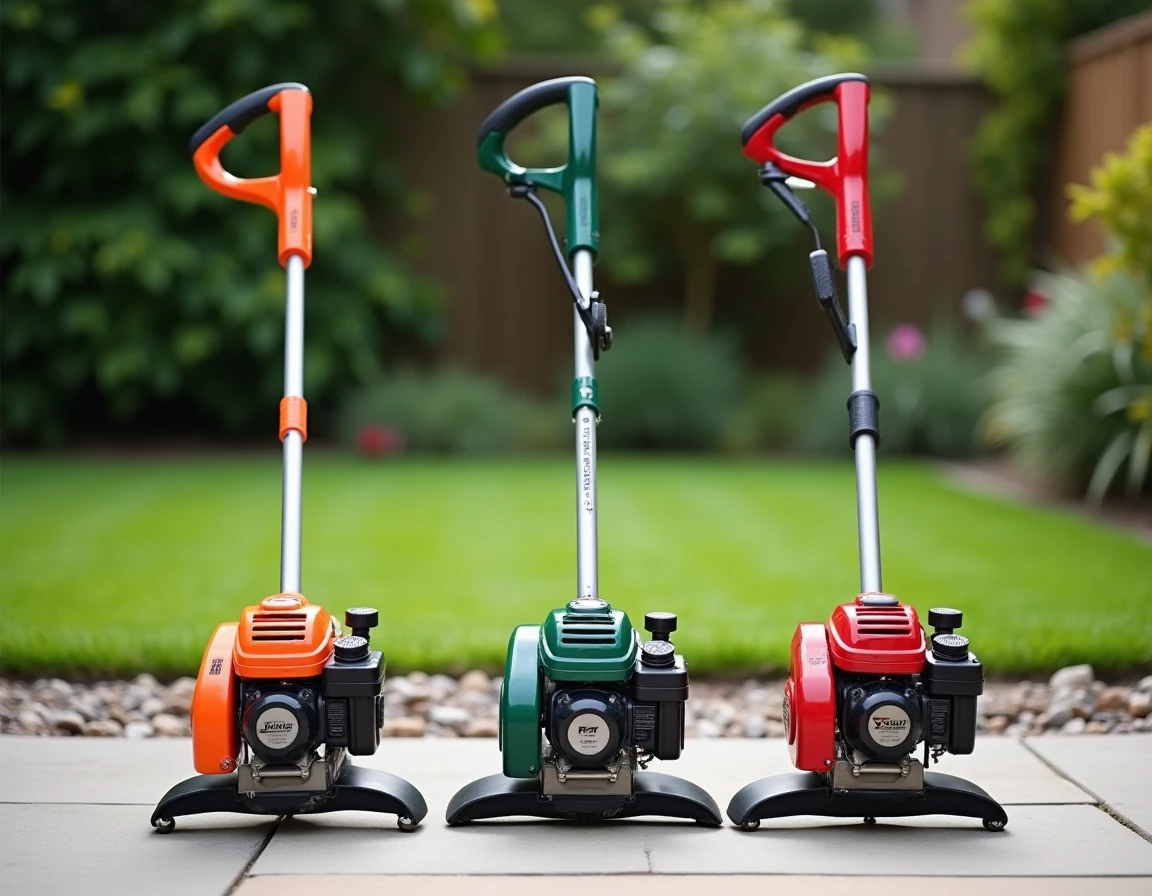
The cutting head is the point of contact with the ground. Three systems coexist on thermal string trimmers: nylon line, steel blades, and plastic knives. The nylon line remains the most versatile for mixed use (grass, flowerbed borders, tree bases).
Line diameter and resistance to tearing
A round, low-diameter line is suitable for soft grass. As soon as the vegetation hardens, you switch to a square or serrated line of larger diameter, which cuts rather than whips. The difference is immediately noticeable on semi-woody shoots.
The cutting width (the diameter of the line’s rotation) determines the area covered with each pass. A generous width saves time on large stretches, but makes the tool less maneuverable in tight corners. For a garden with many flowerbeds and narrow borders, a moderate cutting width offers more precision.
When to switch to a steel blade
If the terrain has recurring brambles, shrub regrowth, or very tough grasses (like established couch grass), a string trimmer compatible with a steel blade avoids constantly consuming line. Check that the model accepts a blade kit, as not all thermal string trimmers allow this.
- Round nylon line: soft grass, finishing along paths, precision work around plantings
- Serrated or square nylon line: dense grasses, tall grasses, dirt path borders
- Steel blade: brambles, woody regrowth, low brush, partially fallow areas
- Plastic knives: light use, regularly maintained lawn, alternative to line on some entry-level models
Noise, neighbors, and local regulations: a crucial criterion
The noise constraint is often underestimated at the time of purchase. A classic thermal string trimmer easily exceeds the threshold at which municipal regulations can become an issue. Several French municipalities have tightened their restrictions in recent years regarding the use of thermal gardening tools, with more frequent checks.
Check your municipality’s municipal order before purchasing. Some prohibit the use of thermal devices on Sundays and in the evenings beyond a certain noise level. The association Bruitparif has documented this trend in its recent reports on neighborhood noise related to motorized garden equipment.
Manufacturers like Stihl, Husqvarna, or Honda now offer thermal models labeled “low emission” or “low noise,” featuring 4-stroke or new generation 2-stroke engines. These machines significantly reduce vibrations and noise levels compared to older models. If you regularly work near property lines, this criterion is as important as power.
Ergonomics and weight of the thermal string trimmer: what changes after an hour of use
In stores, all string trimmers seem light. After forty minutes of work along the edge of a plot, the weight and balance of the machine make all the difference. A poorly balanced model strains the arms and forces compensation with the back.
Three elements deserve concrete attention:
- The harness: on models above 30 cm³, a carrying harness distributes the weight across the shoulders and hips, allowing for longer work without excessive fatigue
- The handle: a D-handle is suitable for occasional use, but a bicycle-style handlebar offers much better control on large areas and sloped passages
- The drive shaft: a straight shaft is more robust, a curved shaft facilitates work under hedges and benches, but handles strong stresses less well
The tank also plays a role. A large-capacity tank adds weight to the machine but avoids interruptions on a large plot. Conversely, a small tank on a lightweight model is better suited for short finishing sessions.
Regular maintenance not to be neglected
A thermal engine requires a minimum of upkeep: cleaning the air filter, checking the spark plug, lubricating the cutting head. On a 2-stroke, the quality of the oil-gas mixture directly affects the engine’s lifespan. A poorly mixed mixture clogs the cylinder and reduces performance in just a few seasons.
The choice of a thermal string trimmer hinges on the consistency between engine displacement, cutting system, and the actual terrain to be maintained. A model that is too powerful for a small flat garden will be heavy and noisy without reason. An undersized model facing brambles and a slope will force the machine to work harder. Starting from the terrain, not the technical sheet, remains the most reliable method to avoid a bad purchase.