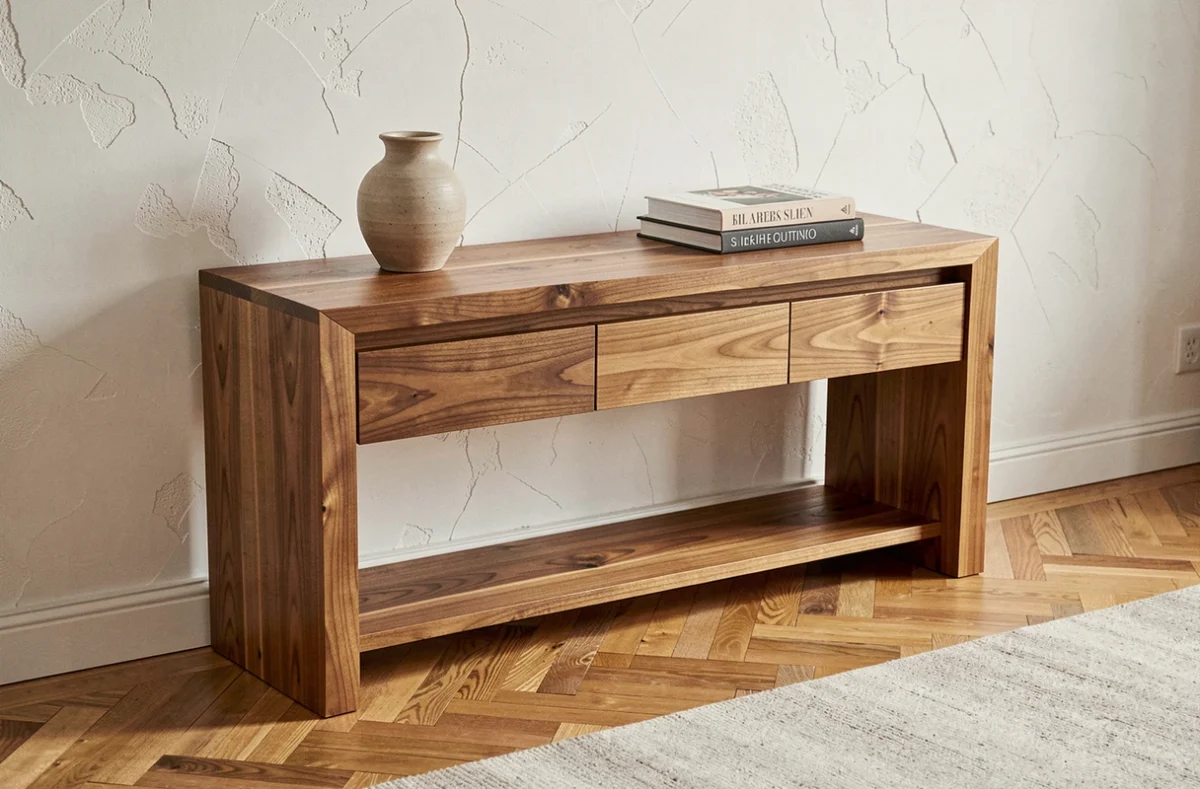
Solid walnut is a hardwood whose density and richness of grain place it in a category of its own among the species used in furniture making. Its brown tones, ranging from dark honey to chocolate, are not the result of staining: they come from the natural chemical composition of the heartwood, the core of the trunk.
This particularity explains why solid walnut retains its depth of color over the decades, whereas other species require surface treatments to achieve a comparable finish.
Traceability of solid walnut: a criterion as decisive as aesthetics
The geographical origin of a walnut tree directly influences the grain, color, and stability of the wood. A European walnut grown in France or Italy develops tighter growth rings than an American black walnut, which alters the final texture of the furniture.
For a high-end purchase, the country of manufacture alone is not enough to guarantee the quality of the raw material. The most demanding processes link each batch to a specific forest massif, sometimes down to the municipality or logging parcel. This granularity in traceability allows for verification of growth conditions and harvesting methods.
The FSC and PEFC labels attest to responsible forest management, but they do not cover all aspects. The transparency of the supply chain, the regeneration of parcels after logging, the protection of local biodiversity, and the potential use of reclaimed or reused walnut are additional criteria to consider. When you are looking for high-end furniture on Atypik Home, this provenance information is among the documented elements.
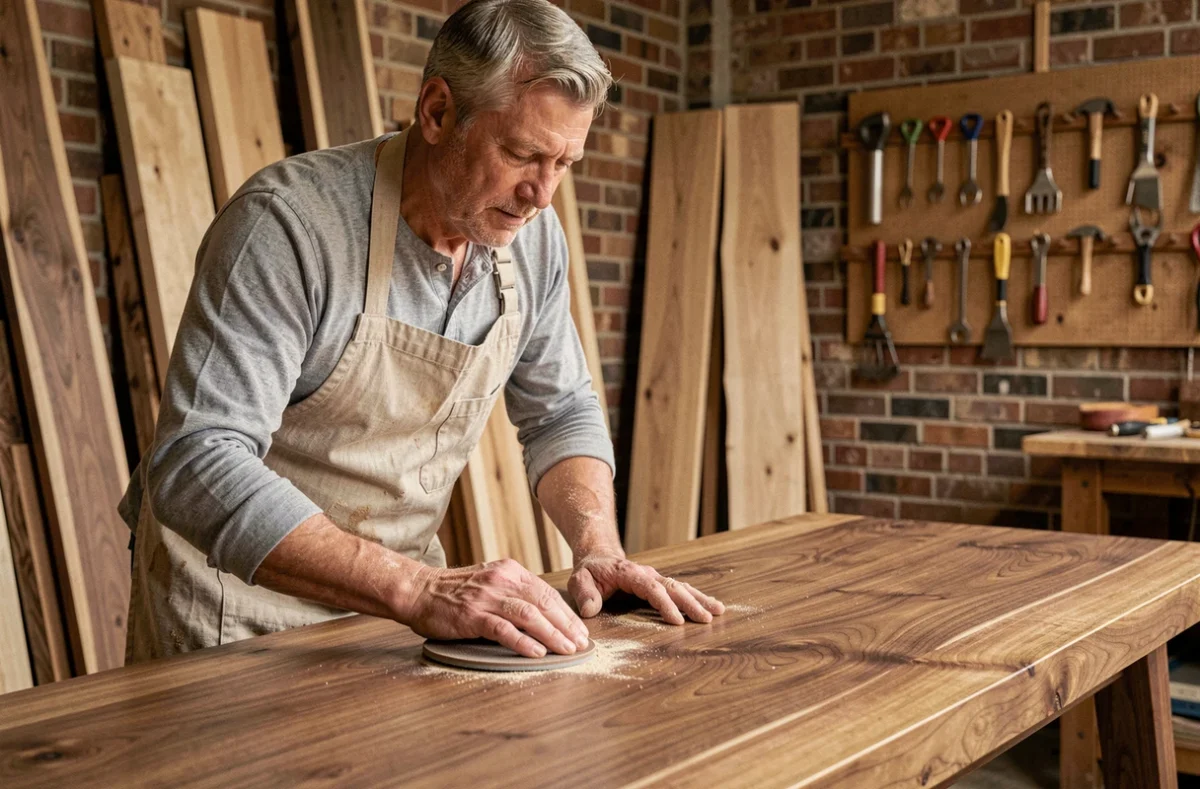
Solid walnut or walnut veneer: check what you are buying
The confusion between solid and veneer remains common in the high-end segment. A walnut veneer consists of a thin sheet of wood (often less than a millimeter) glued onto a particle board or MDF panel. The visual result may be misleading in photos, but the difference is palpable to the touch and visible to the eye.
How to distinguish solid from veneer on a piece of furniture
On a solid walnut piece, the grain of the wood continues consistently on the edge and through the thickness. The pattern of the grain naturally wraps around the edges. On a veneer, the pattern abruptly stops at the edge, sometimes revealing a substrate of a different color or texture.
This check takes a few seconds and protects against misleading descriptions. It is particularly useful for tables, buffets, and desk tops, where surfaces are large and edges are visible.
Hygrometry and maintenance of walnut: what aesthetics does not show
Solid walnut is alive. It absorbs and releases moisture with the seasons, which can cause slight dimensional movements. These variations are normal, but they become problematic under certain conditions.
- Direct proximity to a radiator, fireplace, or stove dries out the wood and increases the risk of cracking or joint shrinkage.
- A too-low ambient humidity level in winter (common with central heating) accelerates the phenomenon. A humidifier in the room significantly alleviates this stress.
- Conversely, a poorly ventilated room or prolonged exposure to stagnant water can cause the wood to swell and distort the joints.
Maintaining an indoor environment with stable relative humidity values is the best prevention. This constraint is not unique to walnut, but its price justifies taking it seriously from the moment of purchase.
The finish matters more than the species for daily maintenance
It is the finish that determines the maintenance routine, not the wood itself. An oiled solid walnut requires periodic reapplication of oil and does not tolerate water stains left too long. A varnished walnut offers a more resistant barrier to liquids but makes local touch-ups more delicate.
For an antique or restored piece, natural wax-based products remain a safe option. Aggressive solvents and abrasive cleaners damage the patina and can whiten the surface.
Combining walnut with other materials in a high-end interior
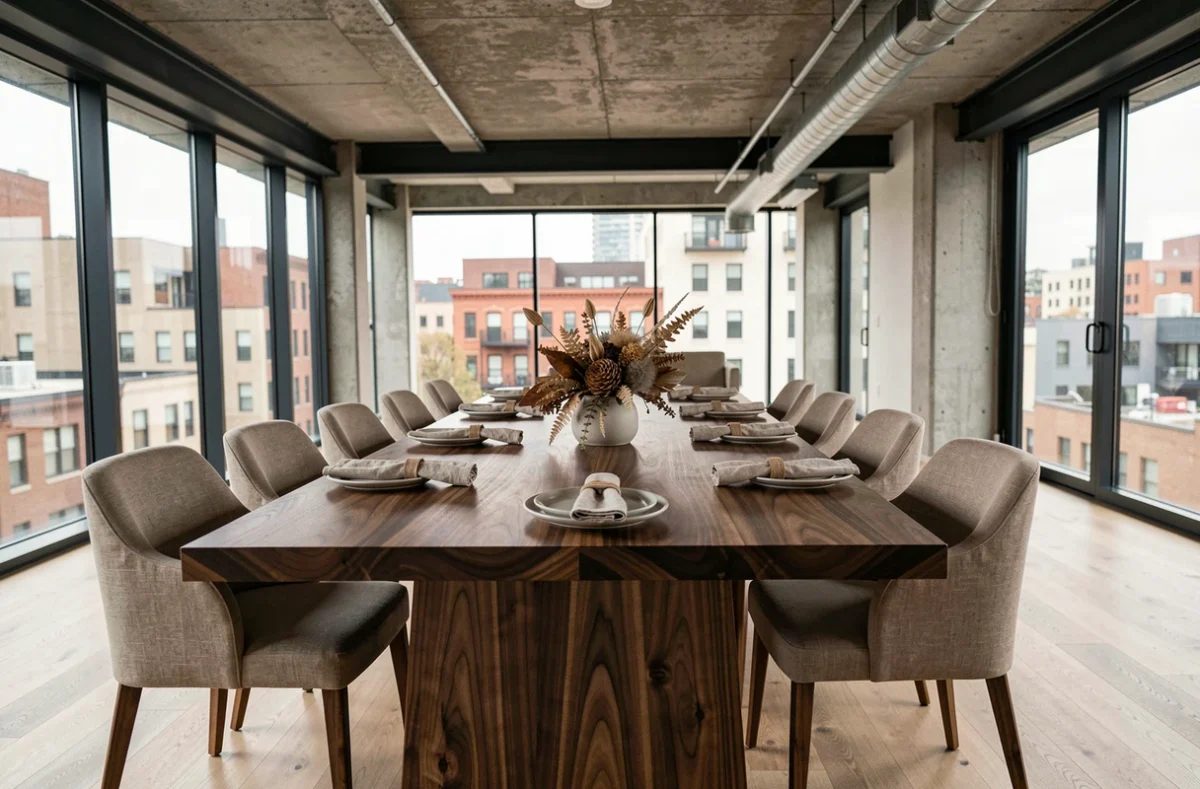
Solid walnut has a warm tone that absorbs light rather than reflecting it. This property makes it an effective counterpoint to cold or shiny materials.
- Black metal (powder-coated steel, cast iron) creates a graphic contrast with the brown grains of walnut, suitable for contemporary spaces.
- White marble or travertine brings a mineral brightness that prevents the room from appearing dark when the walnut furniture is imposing.
- Patinated leather (cognac, dark brown) enhances the warm atmosphere without competing visually with the wood.
- Aged brass or bronze, used on handles or legs, harmonizes with the golden tones that walnut develops as it ages.
A common pitfall is to multiply wood species in the same room. Combining walnut with light oak or ash dilutes the presence of each species. A single dominant species per space yields a more readable result and better highlights the choice of walnut.
Solid walnut ages by developing a patina, not by degrading. A well-positioned piece, protected from direct heat sources and maintained according to its finish, can last for decades without losing its density or the depth of its grain. The initial cost is also measured by this lifespan.