A muscle cramp rarely lasts more than a few minutes, but residual pain can persist for hours. Quickly relieving muscle cramps primarily involves an appropriate postural reaction for the affected muscle. The involuntary contraction most often affects the calf, thigh, or foot, and each location requires a different position to release the spasm.
Dorsiflexion of the foot and calf cramp: the important gesture
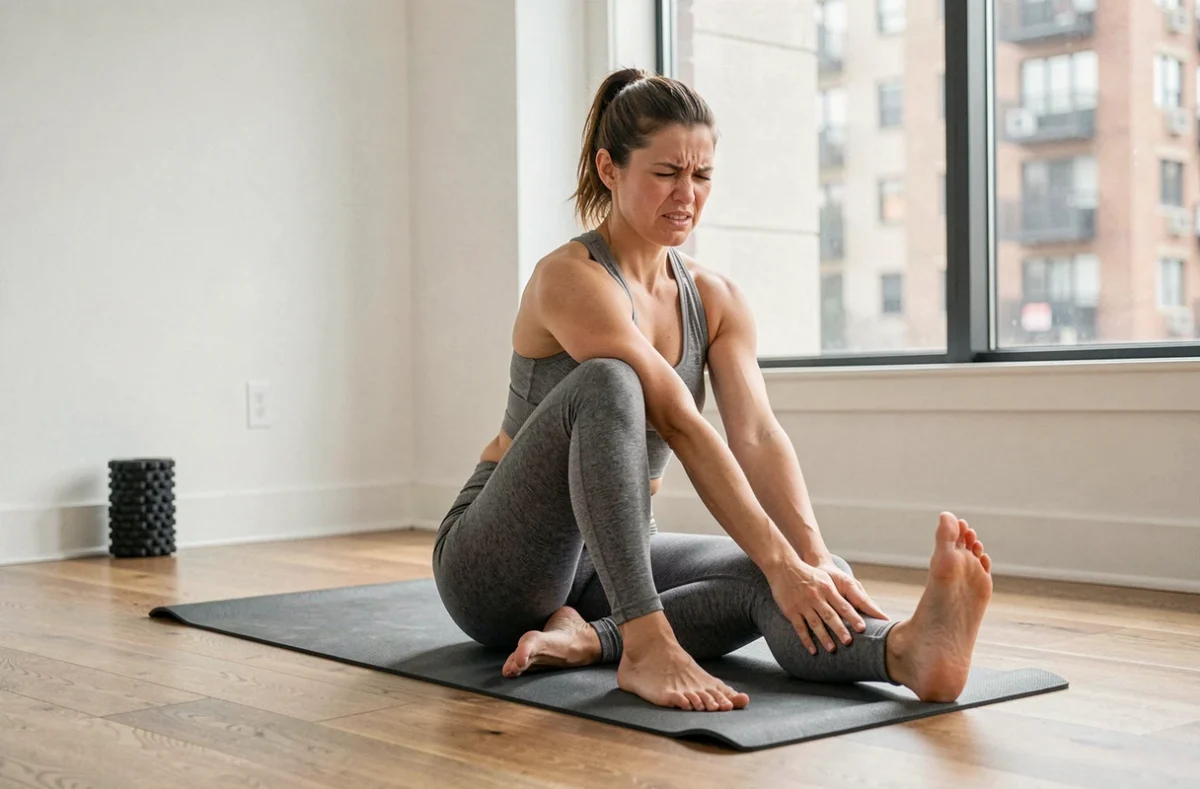
The calf is where most cramps occur, especially at night. The most documented reflex is to pull the toes towards the shin while keeping the knee straight. This dorsiflexion of the foot stretches the gastrocnemius muscle while lying down or sitting, and the contraction generally releases within a few seconds.
Standing, the variation involves placing the forefoot against a wall, heel on the ground, and then gradually moving the pelvis forward. The tension should remain gradual: forcing abruptly on a contracted muscle risks worsening the residual pain. According to the recommendations from Tsa E-Santé, maintaining the stretch position for at least twenty seconds helps the muscle to completely relax.
A often overlooked point: the position of the foot during sleep directly influences the risk of nocturnal cramping. Sleeping with the feet in prolonged plantar flexion (toes pointing down) shortens the calf and promotes spasms. Keeping the sheets loose enough at the feet, or sleeping on the back with a pillow under the ankles, reduces the passive shortening of the calf during the night.
Quadriceps and hamstring cramps: two opposing logics
The thigh houses two antagonistic muscle groups, and the relief position completely reverses depending on which one is cramping.
Quadriceps: bend the knee
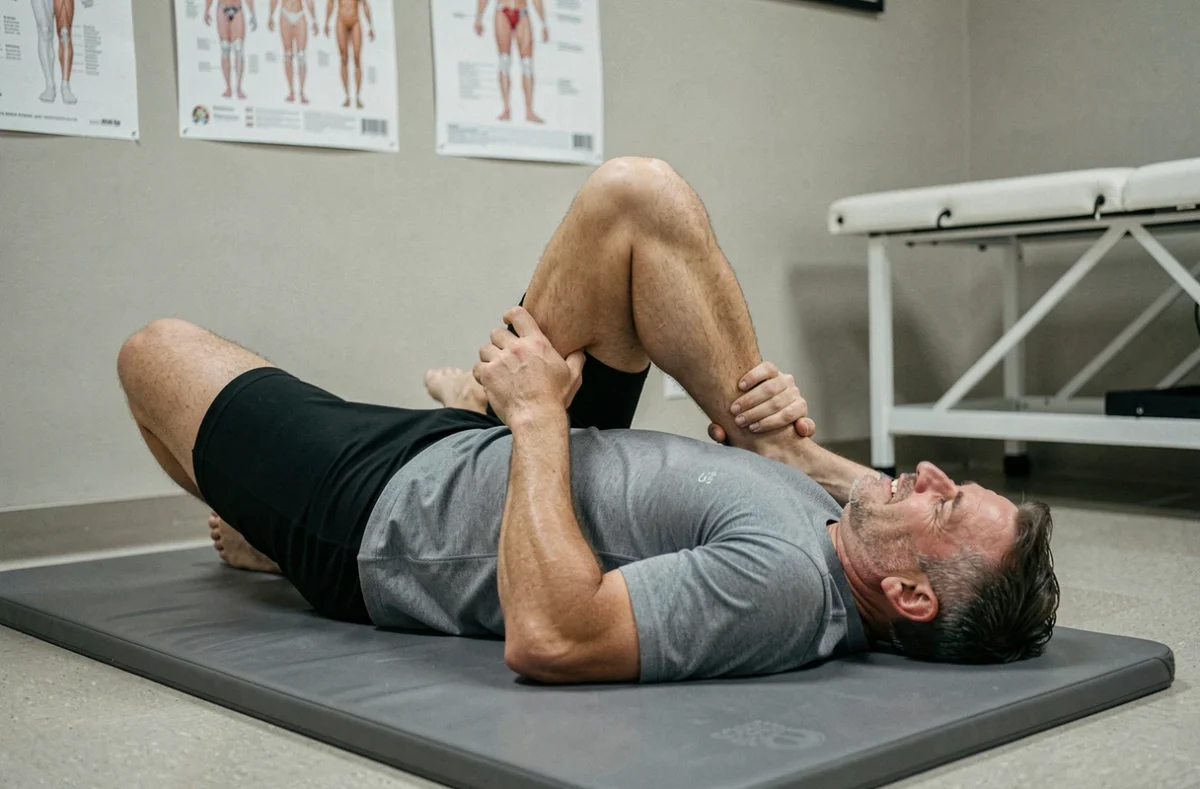
When the cramp affects the front of the thigh, you need to bend the knee and gently bring the heel towards the buttock. Standing, the hand grabs the ankle on the affected side. Lying on the stomach, the same gesture is performed by pulling the foot towards oneself. The pelvis remains stable, without excessive arching.
Hamstrings: extend the leg
Conversely, a cramp at the back of the thigh is relieved by extending the knee. Sitting on the floor, with the leg stretched out in front, lean the torso forward until you feel the stretch behind the thigh. The difference in gesture between these two muscle groups is clear: confusing the two positions prolongs the pain instead of alleviating it.
Foot cramp: manipulate the toes before walking
Foot cramps create a visible tightening of the toes that curl or spread involuntarily. The first effective reaction is to grasp the toes with the hand and stretch them manually in the opposite direction to the contraction.
- If the toes are curling towards the sole, pull them firmly towards the top of the foot and hold the position until complete relaxation.
- If the arch of the foot contracts, place the foot flat on a cold surface and gradually apply body weight to stretch the area.
- Rolling a ball under the arch of the foot after the cramp helps relax the residual muscle fibers and prevent immediate recurrence.
Walking barefoot on a cool surface, often advised as the first gesture, does not specifically stretch the muscle in spasm. It is useful once the contraction has released, not during.
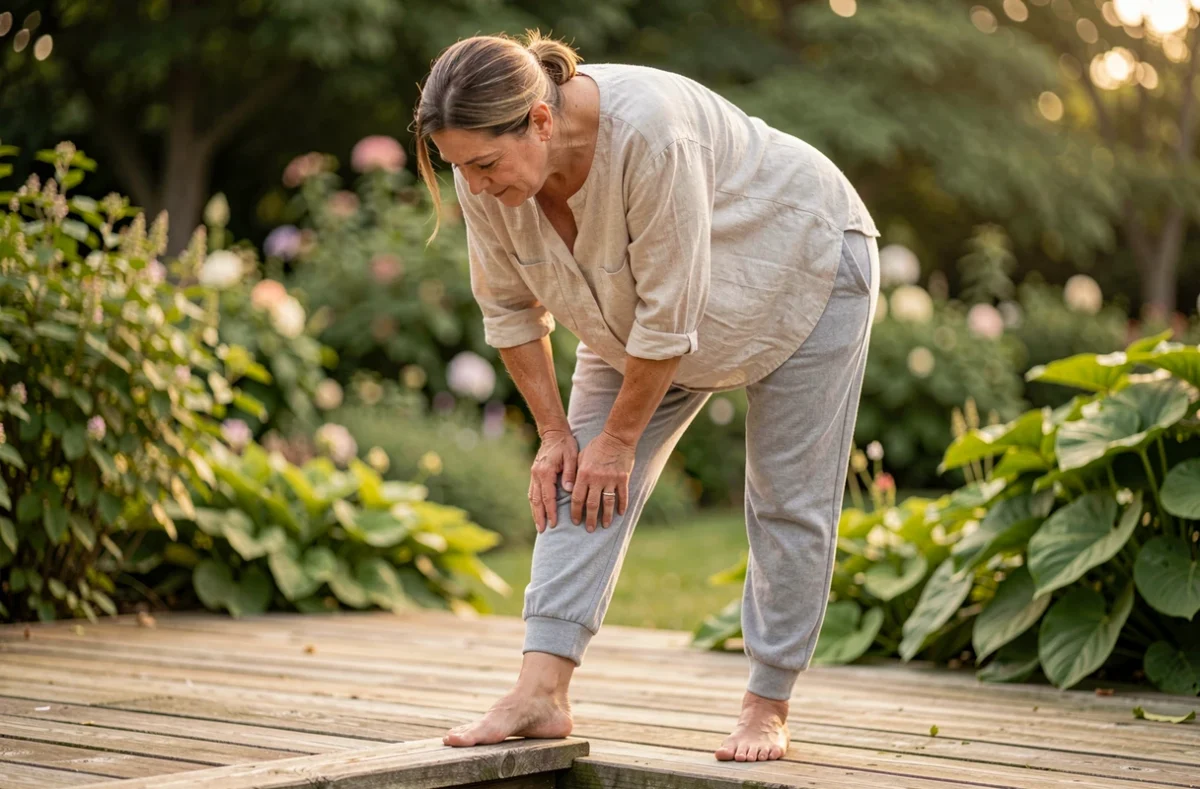
Heat, cold, and magnesium: what the data really shows
After the postural gesture, many people apply a source of heat or cold. These two approaches are not interchangeable. Gentle heat helps to relieve residual tension after the cramp, when it is resolved but the muscle remains sensitive. Cold, on the other hand, is more suitable if a twist or microtrauma accompanies the spasm, as it limits local inflammation.
Applying cold to a muscle still in full contraction can worsen stiffness. The logical order remains: stretch position first, then heat if the pain persists without inflammatory signs.
The question of magnesium
Magnesium is often presented as the go-to supplement for cramps. The available data nuances this reputation. A Cochrane review published in September 2020 concludes that magnesium likely provides little or no clinically significant benefit for older adults suffering from idiopathic cramps. The results also remain uncertain for pregnant women.
This does not mean that supplementation is useless for everyone. A real deficiency in minerals (magnesium, calcium, potassium) can contribute to neuromuscular hyperexcitability. However, taking magnesium “as a precaution” without documented deficiency has not shown a reliable effect on the frequency or intensity of cramps.
Preventive stretches and sleep position: two distinct timings
The relief position during a cramp and the preventive position during sleep respond to different logics. Confusing them leads to ineffective habits.
- Before bedtime: stretch the calves while standing facing a wall, with the back knee straight, for about thirty seconds per leg. This preventive gesture reduces the muscle’s propensity to contract involuntarily during the night.
- During sleep: avoid prolonged plantar flexion. Sleep on your back with feet free or slightly elevated. On your stomach, place your feet outside the mattress so that the toes are not compressed downwards.
- After a nocturnal cramp: get up, place the foot flat, perform standing dorsiflexion, then walk a few steps before going back to bed.
The distinction between curative gesture and preventive posture is rarely addressed in mainstream content. Stretching before sleeping and adapting your sleep position act on two complementary mechanisms: muscle length at rest and nocturnal nerve excitability.
In most cases, cramps are benign and without identifiable cause. When they become frequent, last more than a few minutes, or are accompanied by muscle weakness, medical advice can help rule out an underlying disorder related to circulation, electrolyte balance, or the nervous system.