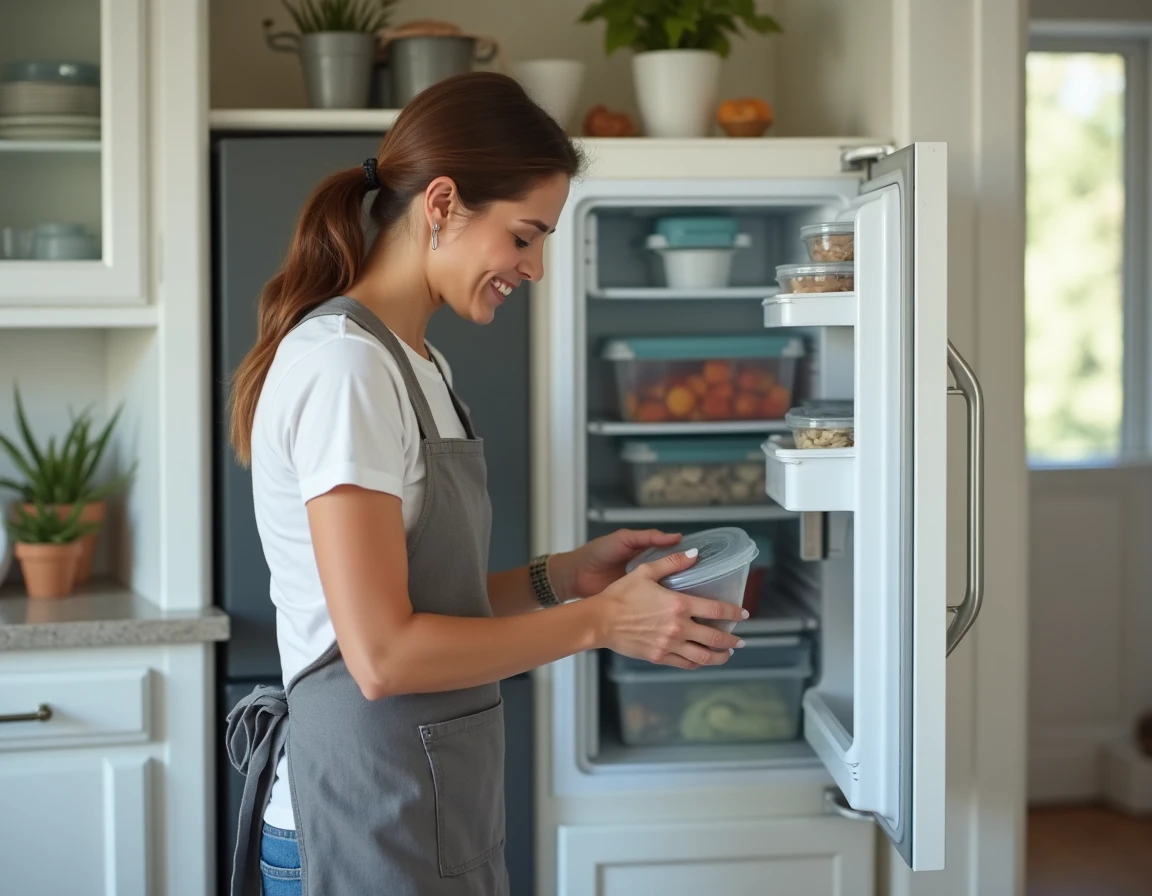
We just filled three shopping bags at the market, the meat trays are on sale in packs of five, and the small freezer in the combined refrigerator is already overflowing. This scenario drives thousands of households each year to consider a dedicated freezing appliance, but the choice is not just about picking the first model on the shelf.
Quick freezing vs. slow freezing: what it changes on the plate
The distinction between quick freezing and slow freezing lies in the rate of temperature drop. A typical household freezer gradually cools food over several hours. Quick freezing, on the other hand, lowers the temperature very quickly, sometimes within a few tens of minutes, using appliances that operate between -30 and -50 °C.
The direct consequence concerns the size of the ice crystals that form in the fibers. The slower the cooling, the larger the crystals, which degrades the texture and taste upon thawing. A slowly frozen red fruit releases a lot of water and becomes mushy, whereas a quick-frozen fruit retains its shape.
For an individual, the question arises concretely: when preparing homemade meals through batch cooking or freezing garden harvests, the quality of preservation affects the final result. Investing in a freezer for individuals allows for better preservation of the nutritional and taste qualities of products, an advantage long reserved for food service professionals.
Energy consumption and new labels: reading the letters without panicking
Since the energy label overhaul in 2021, most freezers for individuals are classified between F and G. Many buyers interpret these letters as a signal of energy-hungry appliances, while it is the evaluation criteria that have been tightened, not the machines’ performance.
A freezer rated A++ before 2021 can now show an E or F without its actual consumption having changed. We thus face a perception paradox that skews comparisons if we mix the old and new scales.
What to check before buying
- The annual consumption in kWh listed on the product sheet, which remains the most reliable figure for comparing two appliances, regardless of the displayed letter.
- The autonomy in case of a power outage, meaning the duration during which food remains frozen if the appliance stops. This information is not always indicated on the packaging.
- The presence of an eco or vacation mode, which reduces consumption during periods of low use. Several manufacturers now offer connected features (Wi-Fi, open door alerts, remote consumption tracking) to manage these settings.
Feedback varies on the actual reliability of connected functions in daily use, but monitoring consumption via an app remains a concrete tool for adjusting habits.
Storage volume and format: adapting the appliance to one’s lifestyle
The most common reflex is to compare the advertised liters. We see chest freezers boasting capacities of up to several hundred liters, while a standard upright freezer typically hovers around two hundred liters. But the gross volume says nothing about actual usage.
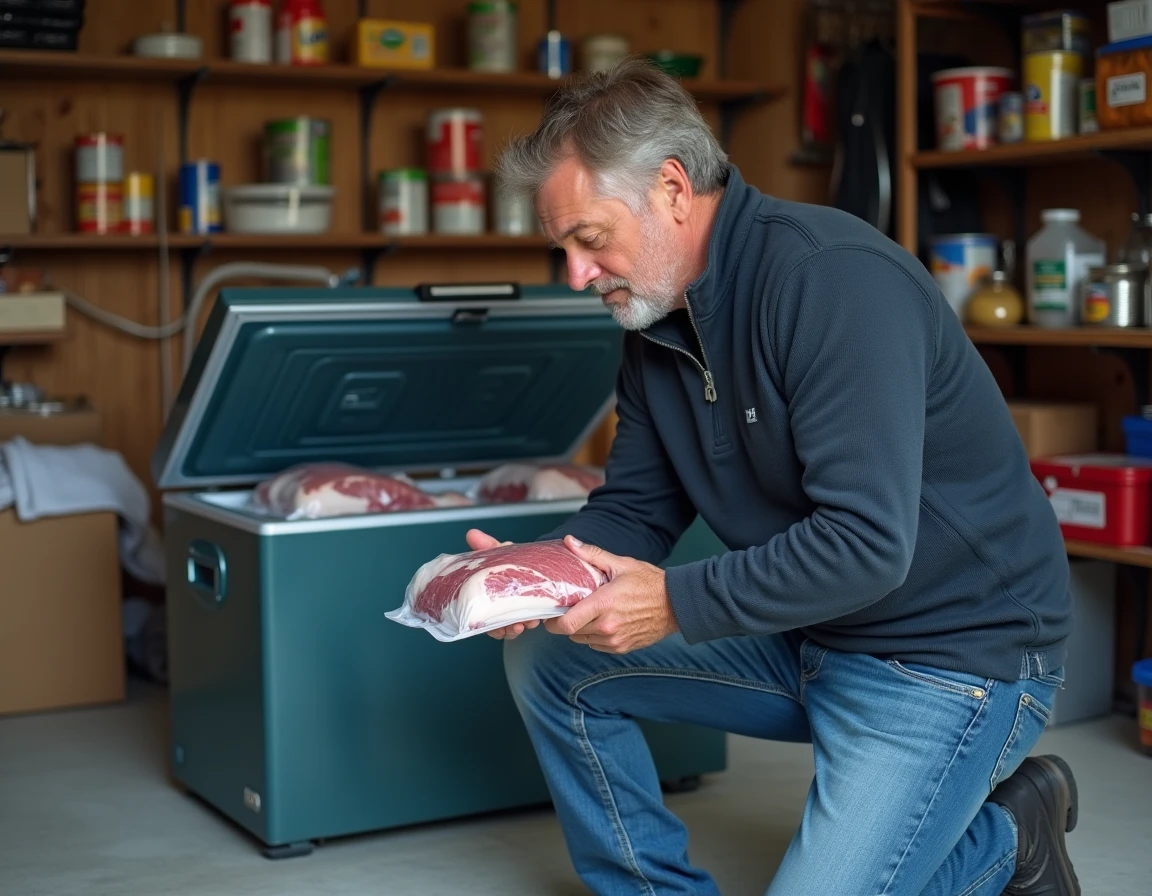
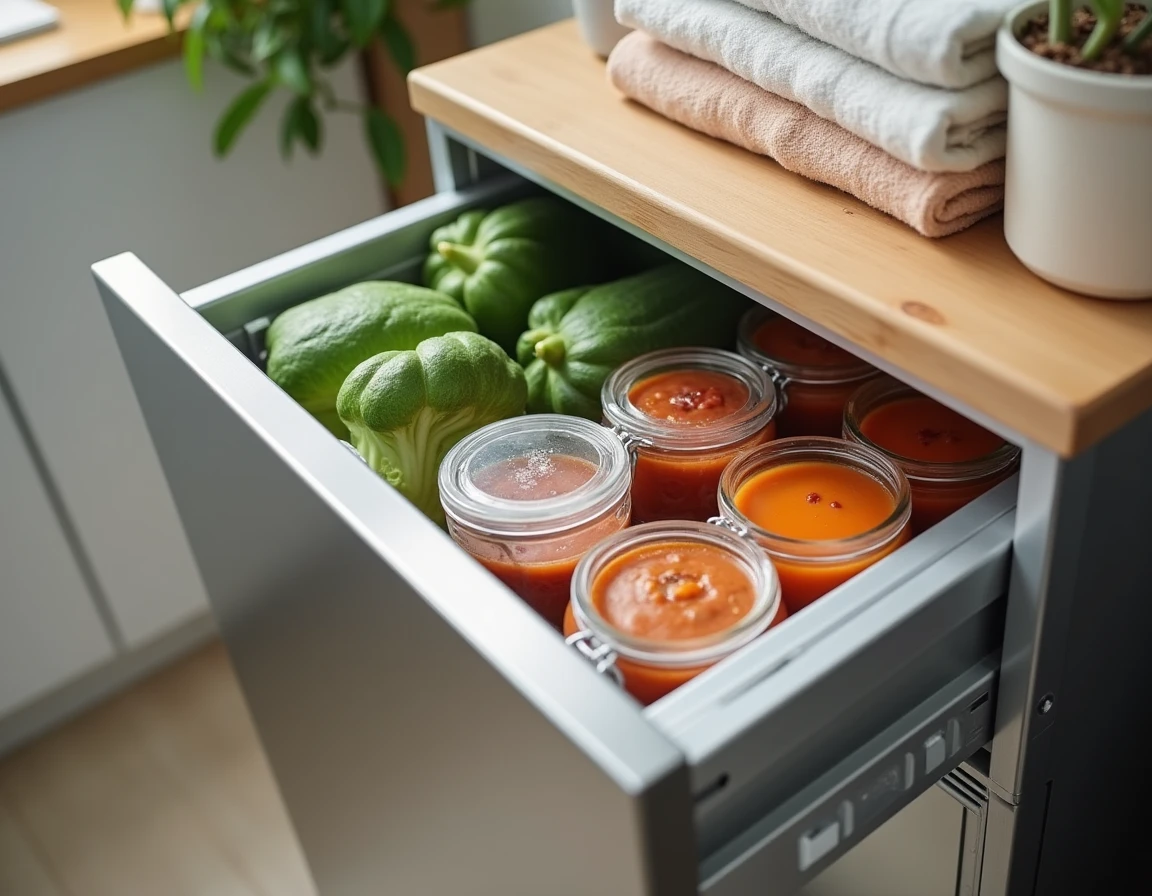
A chest freezer offers a large open space, convenient for storing bulky items (quarters of meat, large dishes). However, food tends to stack up, and one ends up forgetting what lies at the bottom. The upright freezer, with its drawers, facilitates organization and quick identification of products.
Concrete cases to decide
For a household of two that mainly freezes leftovers and some seasonal vegetables, a compact upright freezer is more than sufficient. For a family that buys in bulk from wholesalers or has a productive garden, a chest freezer installed in the garage quickly becomes cost-effective.
Location also plays a role. The chest requires significant floor space and top access, which often excludes the kitchen. The upright freezer fits upright, like a refrigerator, and can be more easily placed in a living area.
Food inflation and batch cooking: the freezer as a budget tool
Since 2022, appliance retailers have reported a significant increase in freezer sales, correlated with food inflation. The logic is straightforward: buying in bulk when prices are low and then freezing allows for smoothing out the grocery budget over several weeks.
Batch cooking amplifies the effect. One prepares five or six dishes on Sunday, portions them, and freezes them. During the week, one defrosts a ready meal instead of ordering or improvising a more expensive meal. This process requires sufficient freezing space, which the small compartment of a combined unit cannot provide.
A dedicated appliance, whether a chest freezer or a domestic freezer, thus becomes a true cost-saving tool. Fruits and vegetables bought in peak season (and thus cheaper and tastier) can be stored for several months without significant loss of quality, especially with quick freezing.
Reducing food waste
Freezing a leftover meal that would have ended up in the trash two days later is an invisible but cumulative saving. Over a year, a household that systematically freezes its leftovers significantly reduces its share of food waste. The appliance pays for itself through the food that is no longer thrown away as much as through bulk purchases.
The choice of a dedicated freezing appliance ultimately depends on three very concrete parameters: the available space, the volume actually used each week, and the type of food stored. A well-sized freezer, read with the correct grid on the energy label, costs less to operate than an oversized model that runs half-empty.