
An architect registered with the Order of Architects is a professional authorized to design a building, submit a building permit, and coordinate a construction site. This registration determines the legality of their signature on urban planning documents. For any construction or renovation project exceeding a certain scale, hiring this professional becomes a regulatory obligation, not a luxury.
Scope of mission: what the architect’s contract really covers
Comparing architects’ quotes based solely on the fee rate leads to costly misunderstandings. The comparison must focus on the exact scope of the included missions, as two proposals at the same percentage may cover very different services.
The missions of an architect are divided into standardized phases. Some are almost always included (sketch, preliminary project, permit submission), while others are subject to negotiations or additional costs.
- The visa for the execution studies, which involves verifying the technical consistency of the plans produced by the companies, is sometimes excluded from the basic contract.
- The scheduling-management-coordination (OPC), which organizes the intervention schedule of the various trades on the site, can be entrusted to a third party or integrated into the mission.
- Assistance with the reception operations, the last phase before handing over the keys, is a point to check: without it, the project owner is left alone with the companies to identify defects.
- Surveys of existing conditions and preliminary diagnostics (structure, asbestos, soil) are not systematically covered by the architect.
An architecture firm like the one presented on https://www.doucerain-architecte.fr/ generally details the covered phases from the first meeting, allowing for a homogeneous comparison.
Requesting a summary table of included and excluded missions before signing remains the most protective reflex for a project owner.
Agency stability and actual availability on site
Competitors emphasize the portfolio and architectural style. They rarely mention a more mundane point: the financial and organizational stability of the firm. A renovation or construction project often lasts several months, sometimes over a year. During this period, the agency must remain operational.
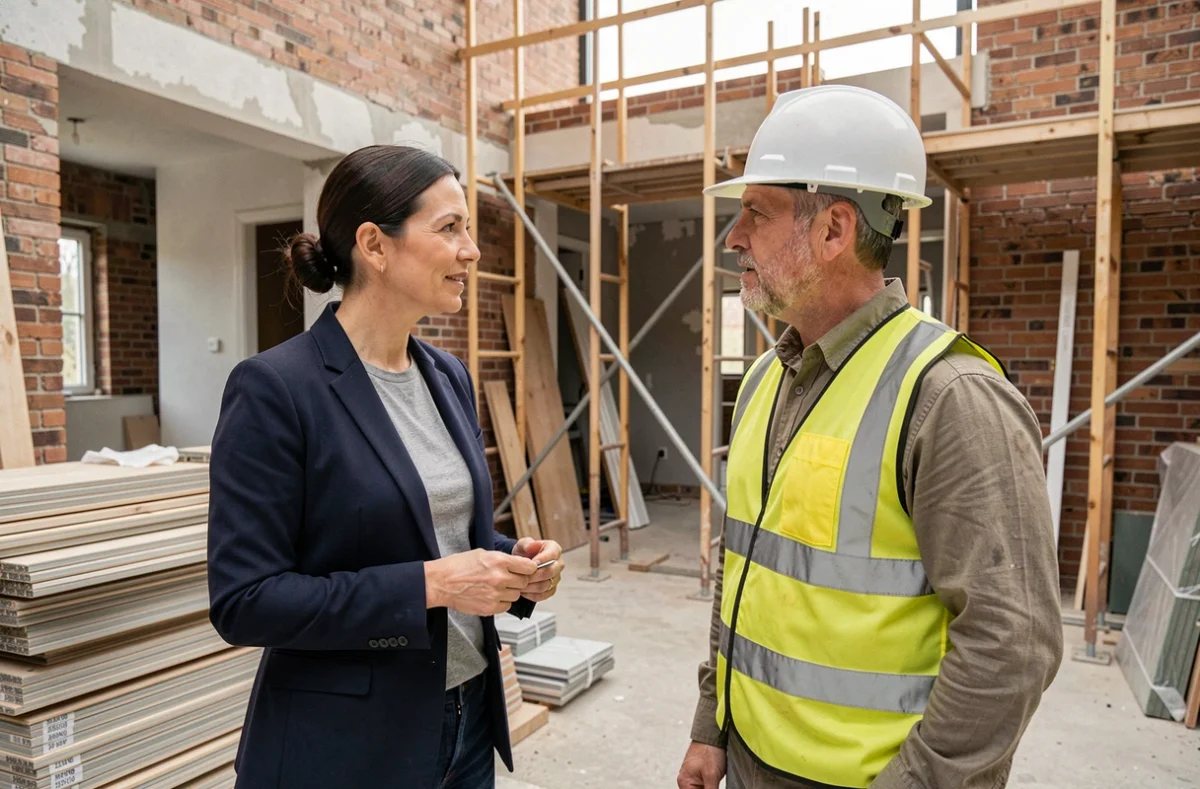
Checking the age of the structure, the size of the team, and the identity of the person who will actually follow the project are reflexes that avoid unpleasant surprises. An overwhelmed registered architect who delegates the follow-up to a junior colleague without informing the client is a common scenario in small firms during busy periods.
Concrete questions to ask during the first meeting
Who will be my main contact during the project? What is the expected frequency of site visits? What happens if the lead is unavailable for an extended period? These questions, posed directly, provide an immediate insight into the seriousness of the organization.
An architect who details their internal organization inspires more confidence than an architect who only showcases their completed projects. Beautiful photos of delivered projects say nothing about the quality of the ongoing follow-up.
Energy renovation and MaPrimeRénov’: a compatibility to check
Since January 1, 2024, households applying for MaPrimeRénov’ for a major renovation must engage a certified advisor by Anah, called Mon Accompagnateur Rénov’. This administrative and financial role is distinct from the design or architectural follow-up mission.
An architect can manage the design and construction without being automatically certified for this support. Therefore, during selection, it is essential to ask the question directly: are you certified as Mon Accompagnateur Rénov’, or how do you work with this advisor?
The absence of coordination between the architect and the certified advisor can block the disbursement of aid. The processing times for Anah files are already long; an incomplete or poorly articulated file between two professionals who do not communicate further extends the timeline.
Work budget and fees: two distinct lines to balance
The overall budget for a construction or renovation project includes the architect’s fees, the actual cost of the work, diagnostic fees, urban planning taxes, and often contingencies. The architect’s fees represent a fraction of the total budget, but their calculation method varies: percentage of the work amount, flat fee, or hourly rate depending on the phases.
A low fee rate associated with a reduced scope of mission can sometimes cost more than a higher rate covering the entire follow-up until completion. Choosing the right professional for your project is not just about one line in a quote.

Registration with the Order and insurance: two non-negotiable checks
Every architect practicing in France must be registered with the Order of Architects. This registration can be verified online on the Order’s website. It guarantees that the professional holds the required degree, adheres to a code of ethics, and is covered by a professional liability insurance.
This insurance protects the project owner in case of issues related to the design. Without it, a structural defect discovered after delivery leaves the client without effective recourse against the architect. Requesting a valid insurance certificate before signing the contract is a step not to be overlooked, regardless of the level of trust established during initial exchanges.
The choice of an architect for a construction or renovation project is based on verifiable criteria: detailed contractual scope, actual organization of the firm, compatibility with current aid schemes, and up-to-date insurance coverage. Architectural style matters, but it comes after these fundamental technical and administrative aspects.